New Release: Queen Anna by Tony Riches

  Author Tony Riches has a new release... A crown won in the eye of a storm. A queen who refuses to be broken... Princess Anna of Denmark s...

Thursday, 22 September 2022

Guest Post: Linda Bennett Pennell

Today I'm delighted to turn the blog over to Linda Bennett Pennell, whose new book,  The Last Dollar Princess, was released as a paperback yesterday. Over to you, Linda...

***

The Real Dollar Princesses or Does Mrs. Astor Know Your Momma & Daddy? 

Caroline Astor

Does Mrs. Astor know you? In the latter half of 19th century New York City if the answer was no, the most coveted invitations would have been beyond your grasp. You had a 5th Avenue address? You were first to wear the latest Worth gowns? Your husband could buy half of Manhattan with plenty of money left over to build your Newport cottage? You hobnobbed with European nobility and royalty? If you were – gasp – New Money, none of your family’s accomplishments, regardless of how well earned, mattered. 

Washington Square House

19th century New York’s well-to-do were basically divided into two groups: Nobs and Swells. Nobs were old New York, often referred to as Knickerbockers. They lived quietly. Their homes surrounded Washington Square Park and lined the best locations along lower 5th Ave. The husbands earned their livings as bankers and from real estate. A girl’s debut meant a white dress with a few friends to tea at home. When she found the right young man, their engagement party or dinner and the wedding all took place at home witnessed by the young couple’s most intimate friends. Life among the Nobs was calm, quiet, subdued, and above all else, eschewed ostentation.

Swells were polar opposites. The husbands were captains of industry. Ostentation appeared to be the guiding principle in all they did. Whether it was building a new mansion farther north on 5th, importing the grandest artwork and furniture from Europe, or buying the best Worth gowns, the bigger and louder the display, the better. Nobs naturally viewed Swells as social climbing arrivistes who were crude, uncouth, and tacky. The Nob husbands might do business with the robber barons, but the wives would have nothing to do with the new money people, and as everyone knows, women are generally the arbiters of society.

For Swells with daughters of marriageable age, the situation was dire indeed. Their beautiful, well-educated, accomplished girls had little-to-no chance of being introduced to, much less marrying, New York’s most desirable, socially prominent young men. What was an ambitious mother to do? Enter the Buccaneers, whose mamas cast their gazes east toward much greater prizes than even Mrs. Astor could command.

Edith Wharton, the novelist and chronicler of Gilded Age manners, grew up among the elite of old New York and knew them well. She also knew the daughters of those déclassé new money arrivistes, fictional versions of which she incorporated in her last, unfinished novel, The Buccaneers. She dubbed these girls with rich papas and socially ambitious mamas, but who lacked pedigree, thus. One must suppose she chose the nickname due to the effect they created among the targets of their parents' social-climbing efforts, the English aristocracy. 

It has been said that these American heiresses presented a significant, alluring contrast to their English counterparts and it was not just their papas' money. The daughters of wealthy Americans were well-educated and reared to be confident in themselves, their abilities, and their opinions. Their mothers, reared in the spirit of the pioneers, set examples of strong-willed, accomplished wives to whom their husbands bowed in all things domestic. The daughters were cossetted and adored by their fathers; their English counterparts were basically treated as lesser members of the household and something of a liability until they married. The daughters of America's robber barons tended to be vivacious and outgoing. In other words, they were often the life of the party in an otherwise stuffy, rigid society. In the eyes of some Englishmen, including the Prince of Wales, they were a refreshing breeze blown in on the Atlantic Drift.

Between 1870 and 1902, no fewer than 102 American girls married into the English peerage. While American heiresses had been marrying abroad for many years, none had reached the epitome of the English social order until 1876 when Consuelo Yznaga married George, Viscount Mandeville, the future 8th Duke of Manchester.

Consuelo

Consuelo was born in 1853 in New York City to Antonio Yzanga del Valle, a Cuban diplomat and of the landed Cuban gentry, and Ellen Maria Clement of Ravenswood Plantation, Concordia Parish, Louisiana. The Yzanga family owned plantations and sugar mills in Cuba, a home in New York, and a large home in New Port while the Clement family was originally from stalwart New England stock. Between them, Consuelo's parents were rich, owned large tracts of land in the US and Cuba, and were connected to the Spanish aristocracy, but this was not enough to gain their beautiful, accomplished daughter invitations to the best balls and dinners. Mrs. Astor did not "know" them; therefore, they were beyond the pale. To make matters worse, Mrs. Yzanaga was considered "fast" by the people who counted.

Shunned by New York society, in the 1860's Mama Ellen decamped for the much brighter and more accepting society of Paris where her three daughters made quite a splash. They became favorites at the court of Napolean III's Empress Eugénie. The empress had no illusions when it came to maintaining a glittering court. Social standing was far less important than sparkling personalities, charm, wit, and plenty of money. Her court was peopled by those who could afford new dresses for every occasion and lots of diamonds. The Yzanaga girls suited very nicely and were seen often at the Tuileries attending State Balls and musicales. Only thirteen, Consuelo knew the empress well and became friends with Alva Smith, the future Mrs. Vanderbilt.

Empress Eugenie

In 1875, the Yzanaga women joined the social whirl in Saratoga Springs, NY, where life had much more to do with seeing and being seen than any health concerns the mineral waters might address. Suitable young men came for the horse races and to observe the young ladies promenading along the United States Hotel piazza and attending the weekly balls all under the strict eyes of mothers and chaperones. The now 22 year-old Consuelo drew the notice of many of the young men, but one young man in particular drew that of Mama Ellen. 

At 23, George Drogo "Kim" Montagu, Lord Mandeville, had already seen something of life beyond the walls of his family's country seat, Kimbolton Castle. He had served as ADC to Sir Garnet Wolseley in the Zulu War. While in Saratoga, he suffered an attack of a recurring malady thought to be a fever picked up in Africa and Mama Ellen saw an opportunity. She invited him to recuperate at the Yzanaga family cottage in Orange, New Jersey. Consuelo and her mother acted as his nurses, giving them exclusive access the most eligible bachelor. His positive qualities included being charming, being friends with the Prince of Wales, being the future 8th Duke of Manchester, and having developed an attraction to Consuelo. On the down side, he gambled on games of chances and the horses and was in need of cash. That last negative became a positive when Papa Yzanaga offered a £200,000 (approximately $6 million today) dowry. Consuelo accepted his proposal and a wedding date was set. The 7th Duke and Duchess of Manchester were furious, but the couple were wed in New York's Grace Church in 1876.

The wedding party was greeted by newspapers and a cheering public as the event of the season. New Yorkers were excited by and proud of the hometown girl who was now a duchess. London was equally as charmed by Consuelo. The Duke of Portland described her entry into the London season as a success, saying, "[she] took society completely by storm by her beauty, wit, and vivacity and it was soon at her very pretty feet."

The Prince of Wales

Consuelo blazed the trail for the American heiresses that would come after her. These “dollar princesses,” as they became known, would bring millions to their aristocratic husbands, saving many noble English estates from ruin and allowing their parents back home in the States a step up on the Nobs and Mrs. Astor who shunned them. After all, “have you met my daughter, the countess…marchioness…duchess” definitely has a certain cachet, does it not? 


Sources

De Courcy, Anne. The Husband hunters: Social Climbing in London and New York. London: Weidenfeld and Nicholson, 2017.

MacColl, Gail and Wallace, Carol MCD. To Marry an English Lord: Tales of Wealth and Marriage, Sex and Snobbery. New York: Workman Publishing, 1989.

https://www.jstor.org/stable/43512827

https://www.tatler.com/article/manchester-tiara-consuelo-dowager-duchess-of-manchester

https://www.history.com/news/american-heiress-marry-british-aristocrat

https://prabook.com/web/maria.consuelo_montagu/2518466


I have been in love with the past for as long as I can remember. Anything with a history, whether shabby or majestic, recent or ancient, instantly draws me in. I suppose it comes from being part of a large extended family that spanned several generations. Long summer afternoons on my grandmother's porch or winter evenings gathered around her fireplace were filled with stories both entertaining and poignant. Of course, being set in  the American South, those stories were also peopled by some very interesting characters, some of whom have found their way into my work.

As for my venture in writing, it has allowed me to reinvent myself. We humans are truly multifaceted creatures, but we tend to sort and categorize each other into neat, easily understood packages that rarely reveal the whole person. Perhaps you, too, want to step out of the box in which you find yourself. I encourage you to look at the possibilities and imagine. Be filled with childlike wonder in your mental wanderings. Envision what might be, not simply what is. Let us never forget, all good fiction begins when someone says to herself or himself, "Let's pretend." 

I reside in the Houston area with one sweet husband and one adorable, sweet Labradoodle who is quite certain she’s a little girl.

"History is filled with the sound of silken slippers going downstairs and wooden shoes coming up." Voltaire  

Social Media

Blog: History Imagined: For Readers, Writers, and Lovers of Historical Fiction https://historyimagined.wordpress.com/


Facebook:  https://www.facebook.com/AuthorLindaBennettPennell


Website:  http://www.lindapennell.com/


It must be said. Scandal follows her family like a faithful hound. No matter how hard they kick it away, it comes slinking around to insinuate itself into their lives again. Although her family is obsessed with social position, one thing is certain. Heiress India Elisabeth Petra De Vries Ledbetter is an outlier among her kin. She is determined to set her own course, family expectations and society's demands be damned.

Reared away from the social whirl of Gilded Age New York, India would prefer a life of philanthropy in her native Appalachia, but Mother and Grandmama have far grander plans. They believe Mrs. Astor’s old 400 are ready to overlook the past and that an advantageous marriage will cement their place in society once more. In fact, they have already selected the prospective bridegroom. The only problem? No one consulted India.

With captivating insights into the human spirit and heart, The Last Dollar Princess leads us on a riveting quest for self-determination through the most elegant and glamorous settings of the early 20th century. Perfect for fans of Marie Benedict, Daisy Goodwin, and Julian Fellows, this sweeping work of historical fiction will stay with readers long after the last page is turned.

Buy Link

https://www.amazon.com/Last-Dollar-Princess-Independence-Coronation-ebook/dp/B0B2X9ZG4Q


Sunday, 3 July 2022

Review: Rogues, Rebels and Mavericks by John Brunton

The lovely people at Amberley books sent me a review copy of John Brunton's Rogues, Rebels and Mavericks of the Middle Ages.


As the author says in the introduction, this is a collection of pen-portraits of some less frequently written about characters of the medieval period.

The chapters move chronologically, and include stories from around the world, but start and finish in England, beginning with Earl Waltheof, the English rebel who opposed William of Normandy and ending with Margaret Countess of Salisbury, executed by Henry VIII.

Some of these characters were familiar to me, some less so, but consistently the author paints a vivid picture and sets the scene for every chapter. John Brunton is a master story-teller, giving the reader enough background information that the tale of the individual sits nicely in its historical context without slowing the narrative with unnecessary detail. Almost as much as the stories of the individuals, one comes away with a real sense of the customs and societal mores and expectations of each period and region under examination.

Inevitably with a collection like this, some chapters work better than others. Whilst fully understanding their inclusion, I found myself less interested in those who, by the author's own admission, were compelled by self-interest and were not sympathetic characters. I still, however, learned a lot from these stories. 

A few stood out though as especially captivating: it was satisfying to learn more about the man behind the idea of 'Ockham's Razor' and to read Christine de Pisan's story, truly a standout woman in the world of men. The life and times of Prince Henry the Navigator gave a lively discussion of the age of exploration and why Spain lost out so much to Portugal, which was a fascinating read.

A couple of the inclusions didn't quite work for me, such as the afore-mentioned Margaret, Countess of Salisbury. A tragic and brutal tale, but I felt that she was a victim and we didn't hear about her actions, only what happened to her - so was she a rogue, a rebel or a maverick? I'm not sure.

However, what a delight John de Vere, Earl of Oxford, turned out to be! I've no particular leanings towards either the Yorkists or the Lancastrians so I was able to cheer him on with complete impartiality (especially with his daring escapes from incarceration). He stood out in this collection for me because it appears that his actions, though he was clearly loyal to the cause, were driven not by self-interest, or self-preservation, but an impassioned sense of injustice and a desire for revenge on behalf of his family. 

Obviously the appeal of some characters over others is a personal choice and the author has provided an excellent blend and mix with his stories. As is often the way, and is ably demonstrated here, we can learn so much about history if we take the spotlight off the kings and queens and look at the lives of those around them, and indeed away from the court completely.

A wonderfully clever and novel idea, brilliantly delivered. A definite 'must read' if you are at all interested in the medieval world generally, and the standout characters specifically.

Rogues, Rebels and Mavericks is available in all good books shops, direct from Amberley and from AmazonUK


Monday, 16 May 2022

Guest Post: Tony Riches Researching and writing Raleigh – Tudor Adventurer

 Today I'm delighted to hand over the blog to author Tony Riches, whose new release Raleigh -Tudor Adventurer, is out now. Over to you, Tony:

Tudor adventurer, courtier, explorer, and poet, Sir Walter Raleigh
has been called the last true Elizabethan

My Elizabethan series began when I was researching for an historical novel about Henry Tudor, who like me was born in the town of Pembroke, Wales. I eventually uncovered enough original material to write three books, with Henry being born in the first, coming of age in the second and becoming King of England in the third.

The result was my best-selling Tudor Trilogy, and I decided to continue the stories of the Tudors in a continuous line. I also made a conscious decision to tell the stories through those surrounding King Henry VIII and Queen Elizabeth I, so we see different facets of these complex rulers through the eyes of others.

For my Elizabethan series I chose three very different favourites of the queen, who each saw different sides of her personality. Sir Francis Drake showered her with gold and jewels, stolen from the Spanish, in return for the status he longed for. The Earl of Essex was like the errant son she never had, but Raleigh became her protector, Captain of the Guard, and lived to see the last days of the Tudor dynasty.


I’ve developed a system of researching during the summer months, writing through the autumn and winter, then editing in the spring.  For my research, I like visiting the actual locations used in my books, and tracking down primary sources. In the case of Walter Raleigh, I also studied his surviving letters and papers. 

Raleigh’s personal archive was scattered widely, with many of his papers thought to be lost. Fortunately for me, the late Professor of English at Bedford College, Agnes Latham, spent her life discovering and transcribing over two hundred of Raleigh’s letters, assisted by the work of the late Devon historian Joyce Youings, who was Emeritus Professor of English Social History at the University of Exeter. Agnes Latham also collected all surviving examples of Raleigh’s poetry, adding her invaluable commentary.

As well as offering me an authentic sense of Raleigh’s ‘voice’ and how he addressed others of the Elizabethan Court, these letters were a great help in sorting out the often confusing timeline of events. I was of aware of Raleigh’s tendency to exaggerate, flatter and posture in his writing, but there is no better way to develop an understanding of his motives.

Many of the things I thought I knew about Walter Raleigh proved to be wrong. Raleigh is credited with introducing the potato and tobacco to Britain, but I’ve seen no evidence for either, or for the popular tale of a servant throwing water over him when he mistook the smoke from Raleigh’s pipe for a fire!

Sir Walter Raleigh being doused!

I followed Raleigh across the Irish Sea to the sleepy harbour at Youghal, where he had a house and became Mayor, as well as to the bustling city of Cork, where he served in the English Army of occupation. I also visited Raleigh’s house at Sherborne in Dorset, which still has many original features.

Sherborne Castle

Raleigh’s letters, which cover fascinating details of daily life, as well as his great adventures and disasters, are some of the best examples of the Elizabethan period. They reveal his strengths and weaknesses, as a courtier and failed politician, soldier and poet, a man ready to speak up for the poor and to honour his debts. My hope is that my new book, Raleigh – Tudor Adventurer, will help readers see beyond the myths and half-truths, and have a better understanding of the man who has been called the last true Elizabethan.

Tony Riches

Book Links: 


Author Bio

Tony Riches is a full-time UK author of Tudor historical fiction. He lives with his wife in Pembrokeshire, West Wales and is a specialist in the lives of the early Tudors. As well as his new Elizabethan series, Tony’s historical fiction novels include the best-selling Tudor trilogy and his Brandon trilogy, (about Charles Brandon and his wives). For more information about Tony’s books please visit his website tonyriches.com and his blog, The Writing Desk and find him on Facebook and Twitter @tonyriches


Monday, 9 May 2022

Being an Expat Inspired The Admiral’s Wife

I'm delighted to hand the blog over today to guest MK Tod, whose new novel, The Admiral's Wife, was inspired by her years living abroad:

The Admiral's Wife was conceived as a novel based on the experience of living in Hong Kong for three years. Initially, I created four women who bonded over qi gong and the expat life. Each woman had difficulties and collectively they supported one another through various traumas. Although that version is long gone, when I reread sections of it now, the emotions of that time come roaring back. 

So, what was it like to uproot yourself and live in a foreign country? When my husband and I returned from Hong Kong, friends and family would ask, "Did you love it there?" I always replied that we had an amazing time - which was true. 

After returning to Toronto, I contemplated a non-fiction account about the expat life (never published) titled Thriving in the Expat Cycle. It began like this:

"In July 2004 my husband’s company asked him to consider a three-year assignment to Hong Kong. We hesitated only long enough to consult with our children and our mothers, then plunged into planning for the adventure. We rode the waves of fantasy and euphoria for the next few months. Everything was possible – travel, employment for me, new friends, new culture, learning Mandarin, new foods. We allowed no hint of difficulty to penetrate the excitement.

However, the bite of reality set in after a few months as I struggled to find occupation and purpose that would satisfy my intellectual, social and emotional needs. After thirty years in a full time career, I had no way to define myself in this new environment, nor did I know how to go about being unoccupied. Time for myself had always been a luxury seldom indulged. Suddenly I had nothing but time by myself.

View from the Hong Kong Apartment

Gradually I found my way. And at the same time my husband and I discovered a new definition for the word ‘home’ and renewed strength in our marriage. We made friends and worked hard to keep in touch with old friends. We kept in close contact with family and had the pleasure of sharing the intrigue of Asia with our children, mothers, and others. We developed a personal appreciation for the concept of culture, understood what it means to be the minority, travelled to exotic locales, learned that business is done differently and dealt with our share of crises.

Lamma Island, Hong Kong

Our three years were both wonderful and, at times, difficult. Would we make the same decision knowing what we know now? Absolutely. Would we approach it differently? Definitely.”

Memory is selective. Looking back from the vantage point of 2022, what stands out for me is the gift of experiencing another culture, the challenges and rewards of adapting to a new way of life, the confidence that comes from building a different world for ourselves, the wonder of travel, the welcoming people we met, and finally, the joy of learning to write.

MK Todd Hiking in Hong Kong

That story of four expat women gradually morphed into The Admiral's Wife, a dual-timeline novel that released on April 26. It bears almost no resemblance to the novel I once called East Rising Sun after the name of a qi gong exercise I learned with my friend Tita. Both Patricia Findlay (the main present-day character) and Isabel Taylor (the main 1912 character) experience the displacement of leaving home and moving to Hong Kong. 

Here's Patricia: "It was at about the five-month mark when Patricia’s enthusiasm had screeched to a halt, replaced by loneliness and depression and the realization that her life had spun out of its orbit. The gravitational pull of her personal sun and planets—Andrew’s children, her friends, her work, and the city she’d lived in for fifteen years—had disappeared."

And here's Isabel on the day their ship arrives in Hong Kong:

"I won’t be able to count on Henry, Isabel thought, as she supervised the loading of their trunks and other cases into a delivery van. I’ll have to make my way here on my own.

The prospect was daunting. She should have known her husband would throw himself into his new responsibilities without worrying about her or their daughter. He would assume that Isabel could manage and be puzzled if she found their new circumstances difficult. If she complained, he would say, “You’ve just got to get on with it.” 

Isabel resolved to do just that.

'Getting on with it' was the task I also took on. I found friends and eventually the occasional consulting project. I took Mandarin lessons and volunteered. Ian and I explored the delights of Hong Kong, hiked its hills, golfed regularly, and had some wonderful (in the true sense of 'full of wonder') travel experiences. 

Living in a different part of the world changed us. Ian often says that it was the most profound experience of our lives. When you live in a place where almost everyone is Chinese, you experience being a visible minority. When you make friends with people from different parts of the world, you appreciate our common humanity. When you live in Asia rather than North America, you appreciate our global community in a very different way. When you can't understand the language, you can more readily relate to the immigrant experience. When the news you read is focused on China, you become acutely aware of another world view. When you see the density and cramped spaces of Hong Kong, you understand how fortunate most of us are in North America. When you visit places like India, Vietnam, and New Zealand, you are overwhelmed by the beauty of our world and its peoples.


The Admiral’s Wife by M.K. Tod ~~ The lives of two women living in Hong Kong more than a century apart are unexpectedly linked by forbidden love and financial scandal.

“Family secrets and personal ambitions, east and west, collide in this compelling, deeply moving novel." -- Weina Dai Randel, award-winning author of The Last Rose of Shanghai 

“Irresistible and absorbing.” Janie Chang, bestselling author of THE LIBRARY OF LEGENDS 

“A riveting tale of clashing cultures, ruthless corruption, and the consequences of corrosive lies.” James R Benn, author of ROAD OF BONES and other Billy Boyle mysteries.

In 2014, Patricia Findlay leaves a high-powered career to move to Hong Kong, where she hopes to rekindle the bonds of family and embrace the city of her ancestors. Instead, she is overwhelmed by feelings of displacement and depression. To make matters worse, her father, CEO of the family bank, insists that Patricia’s duty is to produce an heir, even though she has suffered three miscarriages.

In 1912, when Isabel Taylor moves to Hong Kong with her husband, Henry, and their young daughter, she struggles to find her place in such a different world and to meet the demands of being the admiral’s wife. At a reception hosted by the governor of Hong Kong, she meets Li Tao-Kai, an influential member of the Chinese community and a man she met a decade earlier when he was a student at Cambridge.

As the story unfolds, each woman must consider where her loyalties lie and what she is prepared to risk for love.

The Admiral’s Wife is available at Amazon, Kobo, and Barnes & Noble. 

M.K. (Mary) Tod has been writing historical fiction since 2009. The Admiral’s Wife is her fifth novel. She is also the author behind the award-winning blog, www.awriterofhistory.com, where Mary and guest writers explore the reading and writing of historical fiction. Mary can be reached on her author website www.mktod.com, or on Facebook, Twitter, and Instagram at MKTodAuthor. 

[all photos copyright of MK Tod]


Monday, 18 April 2022

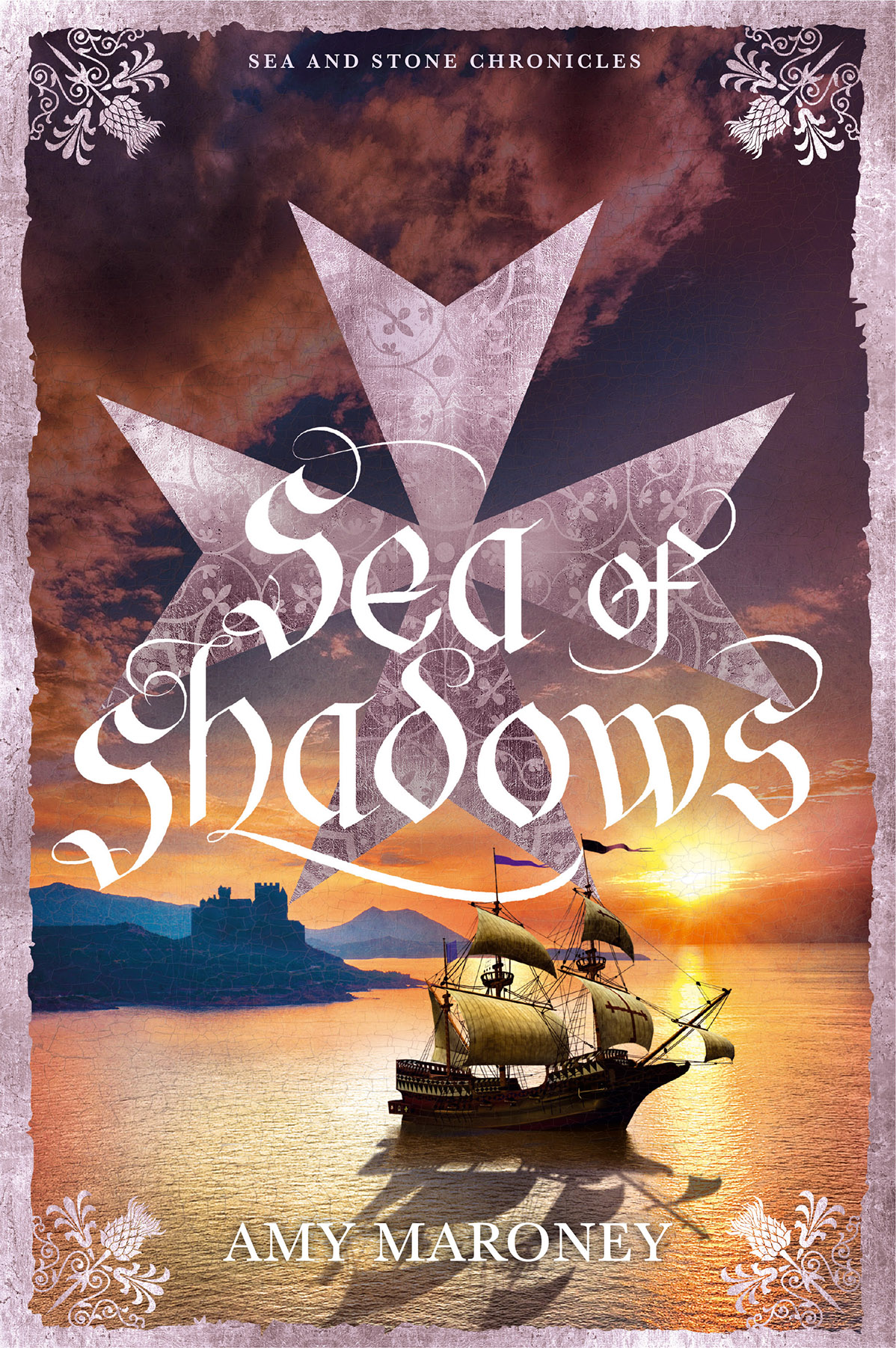
Guest Post: Amy Maroney, author of Sea of Shadows

 It is my absolute delight to welcome author Amy Maroney back to the blog. Amy's new release is called Sea of Shadows and once again she's taking us to Medieval Rhodes. Over to you, Amy:

~~~~~~~~~~~~~~~~~~~~~~

While we rarely hear about women artists working during the medieval and Renaissance eras, they did exist. Though their work was often made anonymously or attributed to the fathers, brothers, and husbands they worked with, we can sometimes find traces of these women in tax rolls and wills. My new novel, Sea of Shadows, stars Anica Foscolo, a gifted woman artist who is the talent behind the oil portraits and frescoes made by her father’s workshop on the island of Rhodes in Renaissance-era Greece. Anica is fictional, but she was inspired by real women. 

In 13th-14th century Paris, for example, women made up about 10 to 15 percent of all taxed individuals. This number included artisans, widows, business owners—any female earning her own taxable income. Illuminators and embroiderers showed up frequently on the tax rolls, as did silk-weavers, brocaders, and textile finishers. Women were accepted into many trade guilds of the time, usually via family members, but some trades had free entry and accepted all who met their requirements. 

Medieval Woman Painting a Woman, by
Giovanni Boccaccio, French National Library

These women mostly worked in obscurity, but there are some examples of women who worked in family art studios and became renowned painters in their own right. Golden Age artist Artemisia Gentileschi is probably the biggest star among them. Her father taught her to paint. She went on to establish her own art studio, securing commissions by wealthy merchants and nobles during her 17th-century career. 

My first historical fiction series, the story of a Renaissance-era female artist and the modern day scholar on her trail, featured a fictional woman painter named Miramonde de Oto. She was based on the real artist Caterina van Hemessen, who worked with her father in his Flanders studio, churning out portraits of wealthy patrons as well as a mesmerizing self-portrait, which she signed. 

Caterina Van Hemessen, Public Domain Image

One of my favorite artists of the Early Modern era is Clara Peeters, master of the still-life painting. She often hid her name or self-portrait within her paintings, which is a trick my fictional artists deploy as well. I love the idea of women artists claiming their work in sly ways, sending a message to viewers decades or centuries in the future. How many more of them are waiting to be found?

Clare Peeters, Self-portrait, Pubic Domain Image

It’s a question that haunts me. I was thrilled to learn recently of a female artist, Agnes van den Bossche, who was a member of the Ghent, Flanders, artists’ guild for over three decades during the 15th century. Her father and brother were master painters. For her part, Agnes painted mostly on cloth. Her only known surviving work is a banner she was commissioned to produce for the city of Ghent. 

The Banner, Image: Wikimedia Commons

Agnes is that rare person—a woman artist of the late medieval/early Renaissance era whose story survives. Most of her contemporaries are lost to history, their voices and legacies relegated to the shadows. As a writer who specializes in stories about forgotten women artists, I hold up Agnes as evidence that the artists I create in my fiction are based on real women, not just my imagination. 

With my new Sea and Stone Chronicles series, I wanted to focus on unsung, unknown women like Agnes van den Bossche. For every Agnes we can point to in the historical record, there must be hundreds who are lost to history. Women who had every bit as much talent as their male counterparts–and, in some cases, more—but were never acknowledged. 

Sea of Shadows, the second book in this series of stand-alone romantic historical suspense novels, stars an unlikely duo. Anica Foscolo, a gifted painter on the Greek island of Rhodes, is the daughter of a Venetian artist and a Greek woman. Drummond Fordun is a fierce Scotsman renowned for his exploits as a privateer serving the Knights Hospitaller of St. John, who are headquartered on Rhodes. When her family’s honor is threatened, Anica reluctantly turns to Drummond for help. There’s just one problem: she never planned to fall in love with her accomplice.  

Like Island of Gold, its predecessor in the Sea and Stone Chronicles, Sea of Shadows explores the shadowy world of the Mediterranean during a time of adventure, war, prosperity, and risk. 

The Colossus of Rhodes - Public Domain Image

Artists and artisans exploited the wealth in Rhodes Town under the rule of the Knights Hospitaller, setting up studios and workshops within the walled city. Gold-beaters, jewelers, textile workers, stoneworkers, and painters were among the creative classes. Italian-trained artists were commissioned by the knights to create frescoes and paintings for their private residences and for chapels and churches on the island. At the same time, the astounding layers of history in Rhodes offered opportunities for entrepreneurs to sell artifacts to collectors from Italy, who traveled to the island seeking treasures for wealthy patrons.

My heroine Anica Foscolo, the unsung talent behind her father’s dazzling portraits, is a product of her environment, and as such she embodies the conflicting loyalties of her time and place. She’s Venetian (not always an advantage for a citizen living under the rule of the Genoa-loving Knights Hospitaller), but she’s also Greek (and, as such, seen as subservient by the Knights Hospitaller).

Rhodes under the rule of the knights was a goldmine of adventure, scandal, love, and divided loyalties, offering rich fodder for a historical novelist. Though I never found evidence of a woman artist working in Rhodes at the time, there was plenty of evidence about male artists who prospered there. So I created Anica in homage to women working in family studios who never made it into the historical record. She gives a voice to the silenced stories of the past—and serves as a reminder that the historical record is full of holes just waiting to be filled.

Sea of Shadows 

1459. A gifted woman artist. A ruthless Scottish privateer. And an audacious plan that throws them together—with dangerous consequences. 

No one on the Greek island of Rhodes suspects Anica is responsible for her Venetian father’s exquisite portraits, least of all her wealthy fiancé. But her father’s vision is failing, and with every passing day it’s more difficult to conceal the truth. 

When their secret is discovered by a powerful knight of the Order of St. John, Anica must act quickly to salvage her father’s honor and her own future. Desperate, she enlists the help of a fierce Scottish privateer named Drummond. Together, they craft a daring plan to restore her father’s sight. 

There’s only one problem—she never imagined falling in love with her accomplice.

Universal Amazon link

Amazon UK

Amazon US

Amazon CA

Amazon AU

About the author:

Amy Maroney studied English Literature at Boston University and worked for many years as a writer and editor of nonfiction. She lives in Oregon, U.S.A. with her family. When she’s not diving down research rabbit holes, she enjoys hiking, dancing, traveling, and reading. Amy is the author of The Miramonde Series, an award-winning historical fiction trilogy about a Renaissance-era female artist and the modern-day scholar on her trail. Her new historical suspense/romance series, Sea and Stone Chronicles, is set in medieval Rhodes and Cyprus.

Social Media Links:

Website

Twitter

Facebook

Instagram

Pinterest

Book Bub

Amazon Author Page

Goodreads


Tuesday, 22 February 2022

Review: Philippa of Hainault/John of Gaunt by Kathryn Warner

Serendipitously, the paperback version of Philippa of Hainault and the hardback version of John of Gaunt (Philippa's son) came out at similar times, and the lovely people at Amberley sent me copies of both.

Of course, I started with the biography of Philippa. I found Warner's approach refreshing, and very much enjoyed reading the personal story of the wife of Edward III, beginning with what is known of her childhood and the very difficult early years of her marriage when she and Edward were very much in the shadow of his mother and her co-conspirator Mortimer.

What came across so strongly in Warner's narrative is the personalities of those involved in the stories. Whilst the author debunks many myths, including the claim that Isabella and Mortimer were lovers, she imbues her story with anecdotes and snippets which give glimpses into the characters of the people involved. I was left with a clear impression about the nature of Philippa and her husband and they are presented as rounded personalities, while the author remains analytical, sticks to the known facts and cites primary sources without wandering off into any reveries about what they might have done/thought/said. Warner is a skilled narrator indeed.

I felt, however, that the author might have their work cut out in endearing me to John of Gaunt. To me he's never been an attractive character, but it's so rare to be able to read a biography about one historical character and then straight away dive into one about their son, that I was intrigued. Warner gives John of Gaunt a fair treatment, by which I mean all the reasons for his unpopularity are laid out but again, we are given touching little details, such as his proven devotion to his mother. Also detailed and interesting was the examination of Gaunt's relationships with Blanche of Lancaster and Katherine Swynford.

Both of these books are excellent history books, but they are more than that. They are stories of real people, who come to life. I'd not read works by Kathryn Warner before. She is now one of those whose books I'll automatically read, regardless of the title, because I'm so impressed by the way she approaches her subject matter.

Many thanks to Amberley for providing review copies.

Find the author's books here

Wednesday, 2 February 2022

Skills Workshops: How to Handle a Gladius with Alison Morton's Carina Mitela

Last year, I invited a number of authors to send suitable characters from their books to interview for an imaginary job in my imaginary company. Now a New Year is upon us, and as CEO of this company I've decided that my workforce needs to learn new skills for 2022. I've invited some more characters along to the blog, this time to deliver some workshops, and my employees have gathered in the gym for the last of the sessions.

In charge today is a Roma Novan captain and two of her centurions. Please stay behind the safety ropes until instructed otherwise and Simons, that does mean you, too...

Over to you, Captain!

[Photo below courtesy of Britannia www.durolitum.co.uk]

Salve! I’m Captain Carina Mitela from the Praetorian Guard Special Forces of Roma Nova and Dr Whitehead has asked me to come along today to show you some basics about using a Roman gladius. Although as a 21st century military unit we use state of the art weapons, we ‘encourage’ all our soldiers to train with the gladius as it hones close quarter battle skills and survival instincts. 

With fifty centimetres of carbon steel meanness coming at you, you learn to move fast!

Which books am I in?

I feature in four thrillers set in an alternative timeline. INCEPTIO where I start as a sporty but basically innocent civilian hunted by a crazy person and then flee to Roma Nova, my late mother’s homeland. Next, in CARINA, I undertake my first overseas mission as a rookie officer in the Guard. It was supposed to be simple, but you know how these things go… In PERFIDITAS, there’s betrayal – personal, professional and political – and nobody comes out of it particularly well. Last, in SUCCESSIO, I face the worst – heartbreak, conspiracy and a vicious wrecker who threatens my family and Roma Nova itself. 


As we’re descendants of Romans, we use Latin. But don’t worry, we’re good with working in English. And you can no doubt hear my New World accent. I was raised in the Eastern United States – that’s the part east of the Mississippi stretching to the Atlantic coast. West of the river belongs to the Indigenous Nations until you get to the Spanish Empire states on the Pacific coast. 

Centurions Livius and Servla here to help me also have good English. He’s the tall one with blond curls; she’s the short one with the serious look. 

Okay, let’s get to it.

Using a gladius effectively is not an easy skill and it takes constant practice. However, it gets younger soldiers over the mental leap of being in close personal contact with their opponent, something that goes against our natural social inclination against invading another human being’s personal space. 

Today, we’re going to demonstrate some techniques and then invite you to try some of them yourselves. We’ve brought a dozen practice swords, lightweight helmets with hinged mesh masks and leather protective vests lined with Kevlar. The vests will stop a serious wound, although you may get a few bruises. But I understand you’ve all signed the waiver. [AW looks around for the HR representative, who nods assurance.]

You’ll see round shields on the bench which are a similar type to those used by fourth century Romans. The traditional curved rectangular scutum used a few hundred years before weighs between eight to ten kilograms, so we thought adding that into a first training session might be a little ambitious. Maybe another time. 

You’ll notice the three of us instructing are wearing the lorica, a chain mail shirt. It’s lighter than the ancient version and it’s also lined with Kevlar. It’s our standard training wear for gladius practice but weighs about four to five kilograms. Anybody wish to try one? No? Very sensible. Your leather and Kevlar vests will work well enough today.

Okay, some safety rules:

• It’s fine to hinge the mesh mask up when watching at the side, but the minute you come to practice, the mask goes over the face.

• Do not pick the sword up and wave it around like a klutz. Even the training gladius has a sharp enough edge to draw blood.

• Never turn your back on anybody holding a sword.

• If you need to stop for whatever reason, shout ‘pax’. Nobody will think any the less of you. If you feel emotions getting too much, also fine to withdraw.

• Lastly, forget all the crap you saw in the movies.

Okay, first six buckle up. Get into pairs and check each other. Check all the tabs are firmly closed on the vests and the safety buckles on.  Ditto the helmets and chinstraps. Then fall back into a line behind the yellow marker and one metre apart. That’s three feet in old money.

Livius and Paula will demonstrate the front jab, the classic legionary move. Right foot forward, left foot at an angle to stabilise. Not a lunge or you move too far out of line and risk falling on your face. You also leave your comrade’s flank exposed. The gladius is short, so you don’t need to pull your arm back exposing your armpit – a really vulnerable point. Nor does a jab mean you have to swing your arm to get momentum as you do with a heavier, longer weapon, also meaning you expose that same armpit and often the neck.

At the end of the jab, you twist to horizontal. This can be to cause more damage in your enemy’s flesh or to free it from a dead one’s body. Twist strengthens your wrist but is for practice only, unless some idiot is trying to kill you. Then all that practice pays off.

[Students practice jab in a line]

Using the shield

Now, two volunteers, take a shield each, get a good grip on the handle on the inside with your left hand and try a jab at my colleagues. Don’t hold back!

[Students end up on the floor.]

Okay, that was a little unfair – I apologise. But as you can see, the shield is also a good weapon. It’s not just for defence.  The momentum is directed forward from your left hand, through the metal boss protruding from the front. A targeted shove will knock your opponent off balance or even push the opponent onto the ground where you can finish them off with your sword. Or a shield thrust can Practiced warriors can use the shield to force a chin up and break a jaw or slice and disable legs, arms or anything else. Livius and Servla will demonstrate.

Okay, second six, some jabbing practice, then shields.

[Five minutes allowed]

Okay, stop now. That’s good.  A word about slashing with the edges. The gladius is also very effective for this, but the jab was the key move for Ancient Romans, at least until it got into the dirty and personal part of the battle. A tight line of close-ranked and disciplined soldiers moving as one and with a regular row of lethal weapons was a machine for killing. Each soldier protected the one to their left and could concentrate on bringing the fight to the enemy. But it takes nerve and training to fight effectively that close. Shall we give it a try?

Remember, have faith in your comrade to the right who is protecting you with their shield and use the shield on your left arm to protect your comrade to your left. Okay, move in closer to each, gladius up to the middle of the edge of your shield. Now advance steadily, and jab! Retract swords, advance three more steps, and thrust.

Now, to finish, get into pairs, each with a shield and gladius and have a go at each other. No fatalities, please!

[Five minutes allowed]

Okay well done. Bring your gladius to your side, point down. On my mark, turn toward the wall with the door, then walk slowly toward the bench and lay swords on the bench and shield underneath. Then step over to the table and take the protective vest and helmets off.

Well done, everybody. I hope you enjoyed today. Servla, Livius and I certainly did. 

[AW: Particularly glad to see that Simons has not injured himself, or anyone else.] 

Just to finish, here’s an excerpt from SUCCESSIO when I was practising a specialist manoeuvre with Livius:

I heard cheering, shouting of bets placed, heckling, but filtered most of it out. I had to concentrate on Livius’s weapon slicing the air and jabbing at me and his attempts to defeat me. I was used to the merciless force, but he was wearing me down. Sweat ran down my back and between my breasts with the effort of thrusting and dodging.

I must have been crazy to do this. I felt a rush of fear mixed with adrenalin as I leapt over the chain to avoid a vicious stab. Gods, he was furious now, his eyes as hard as stones. As I dodged faster and faster, I missed my step, he tripped me and I crashed to the ground. As I went down I pulled him to earth with me. As he fell, I used the momentum to throw him over my head while I rolled away. We both scrambled up, panting, measuring each other up.

The violence in his eyes, now tearing with the dust we’d raised, made me determined to finish this quickly. As we sprang up, I feinted to the right, distracting him, leapt into his now opened guard area. Using my whole body, I felled him and landed hard on his chest. Within nanoseconds I had jerked my elbow up to the grey sky, my wrist and arm in one straight hard line. I took a quick shallow breath. The tip of my sword grazed his throat. My hand was poised ready to thrust downwards.

For a few seconds I thought he was going to try something stupid like bringing his sword up from behind and slash my unguarded flesh. His hand was trapped under his body, but his right hand was still free holding the lethal blade. 

‘Drop it.’ I pushed the sword tip harder against the stretched tan skin of his throat, just nicking the surface. A tiny spot of red seeped out.

His eyes narrowed, making them darker. His mouth was still a single hard line. The shouting and heckling from the audience had died. Intense stares lapped at us, but nobody moved.

‘C’mon, Livius,’ I whispered. ‘Give it up. I’m dying for a drink.’ 

The rigid body under me seemed to harden. Suddenly, it relaxed, and I was sitting on softening flesh. The fire in his eyes subsided and a ghost of a grin flitted across his lips. He uncurled his hand and released his blade. 

I stood up and brandished mine in the air with a shout of ‘Victis’. Flavius came forward and, mildly pompous like any referee, declared it finished. I ignored the applause and exuberant shouting around us.

I glanced down at Livius. ‘Friends?’

‘Of course,’ he replied. He smiled then shrugged.


Goody bag!

Don’t forget to pick up your gift bag which contains amongst other things a certificate for today plus a voucher from the Roma Nova tourist office which entitles you to a free pass to all the sites if you visit. Which I hope you will. Thank you for your attendance and for your immaculate and safe performance.

More about our adventures

You can find them here: https://www.alison-morton.com 


and buy my first adventure, INCEPTIO, here: https://books2read.com/INCEPTIO


And that concludes this series. Our previous guest was Fred Kung and you can see his Q&A session here.