New Release: Queen Anna by Tony Riches

  Author Tony Riches has a new release... A crown won in the eye of a storm. A queen who refuses to be broken... Princess Anna of Denmark s...

Showing posts with label Amy Maroney. Show all posts

Sunday, 14 May 2023

Guest Post: Amy Maroney Introduces Queen Charlotta

Last time, I had the pleasure of reviewing The Queen's Scribe by Amy Maroney. Now she's here on the blog to introduce a remarkable women of history whom few might know:


The Queen’s Scribe by Amy Maroney

A broken promise. A bitter conflict. And a woman’s elusive chance to love or die.

I discovered Queen Charlotta of Cyprus while doing research for the Sea and Stone Chronicles, a collection of novels about ordinary people living under the rule of the Knights Hospitaller in medieval Rhodes, Greece. As I studied books and articles about the knights, I learned they had a long history in Cyprus, too. In fact, one of the historical figures who intrigued me most, Grand Master Jacques de Milly, had spent part of his career in Cyprus. Curious, I dug deeper.

Archbishop's Palace, Nicosia

I was astonished to learn a teenaged, widowed queen had ruled Cyprus for a moment in time during the exact era of my research. In 1458, Queen Charlotta took the throne alone, held off her power-hungry half-brother’s massive siege and—when her second husband Louis of Savoy proved a weak leader—sailed around the Mediterranean entreating allies to help save her crown. Furthermore, she was in Rhodes visiting Jacques de Milly when he died in the summer of 1461.

When I learned that Queen Charlotta had her infant son interred in Jacques de Milly’s tomb several years later, I became even more intrigued. Though the histories don’t reveal much about either of these leaders’ personal lives, this detail resonated with me. Whatever their relationship had been like, she chose to bury her only child alongside him. I imagine her husband, King Louis, had no say in the matter. He was not in Rhodes at the time.

I was amazed by this courageous queen’s story, and I resolved to bring her to life.

Queen Eleni and her Daughters

Though King Jean and Queen Eleni’s daughter Charlotta grew up for all intents and purposes a Greek girl in her mother’s apartments, she had to communicate with her husbands and potential allies in French. By all accounts, her French was terrible. The need for trusted interpreters only grew stronger as civil war loomed between the queen and her half-brother. This is why I developed the concept of a fictional French heroine who serves the queen as a trusted scribe and interpreter.

Kyrenia Fortress

After the murder of her husband, Prince João of Portugal, Charlotta faced a new betrothal. This time, her fiancé was her first cousin, Louis of Savoy. In the Greek Orthodox tradition of the era, the marriage of first cousins doomed the bride and groom to hell. Charlotta’s mother, a proud Greek, naturally opposed the union with every fiber of her being. But as soon as she died, the marriage was on. 

To everyone’s surprise, King Jean died just a few months after his wife (the sheer number of mysterious deaths and outright murders in the Lusignan Court was staggering). Thus, at fifteen, Charlotta ascended the throne. Her half-brother, Jacco, vowed he would seize it from her. His plan: gain the favor of the Sultan of Egypt, raise an army, and attack his sister’s kingdom.

I chose to tell Queen Charlotta’s tale through the eyes of fictional Estelle de Montavon, daughter of a falconer. I first wrote a story starring her in an anthology a few years ago, and she plays a minor role in my novel Island of Gold

Estelle, a talented scribe, develops a knack for languages once she arrives in Rhodes from France with her family. As a French-born person, she offers unique value to the Lusignan court of Cyprus, which steadily lost touch with its French roots all through the late medieval era. This became especially apparent in the mid-fifteenth century after King Jean married Queen Eleni Palaiologina, who turned the court rapidly Greek.

In The Queen’s Scribe, Estelle’s language skills become as valuable as gold when the royal court retreats to Kyrenia Fortress and a civil war looms between the queen and Jacco. When the queen crosses the Mediterranean Sea beseeching allies for help, Estelle is at her side, witnessing every triumph and disaster along the way. 

I hope that by illuminating this extraordinary queen whose ambition and courage burned bright for a few short years in the fifteenth century, The Queen’s Scribe builds awareness of a woman of power whose story has been lost in the mists of time.

[You can read Annie's review HERE]

Author Bio:

Amy Maroney studied English Literature at Boston University and worked for many years as a writer and editor of nonfiction. She lives in Oregon, U.S.A. with her family. When she’s not diving down research rabbit holes, she enjoys hiking, dancing, traveling, and reading. Amy is the author of The Miramonde Series, an award-winning historical fiction trilogy about a Renaissance-era female artist and the modern-day scholar on her trail. Her new historical suspense series, Sea and Stone Chronicles, is set in medieval Rhodes and Cyprus.

The Queen’s Scribe is available from Amazon UK: https://mybook.to/TheQueensScribeUK 

and Amazon US: https://mybook.to/QueensScribe

Social Media Links:

Website: https://www.amymaroney.com/

Twitter: twitter.com/wilaroney

Facebook: www.facebook.com/amymaroneyauthor

Instagram: www.instagram.com/amymaroneywrites/


Monday, 18 April 2022

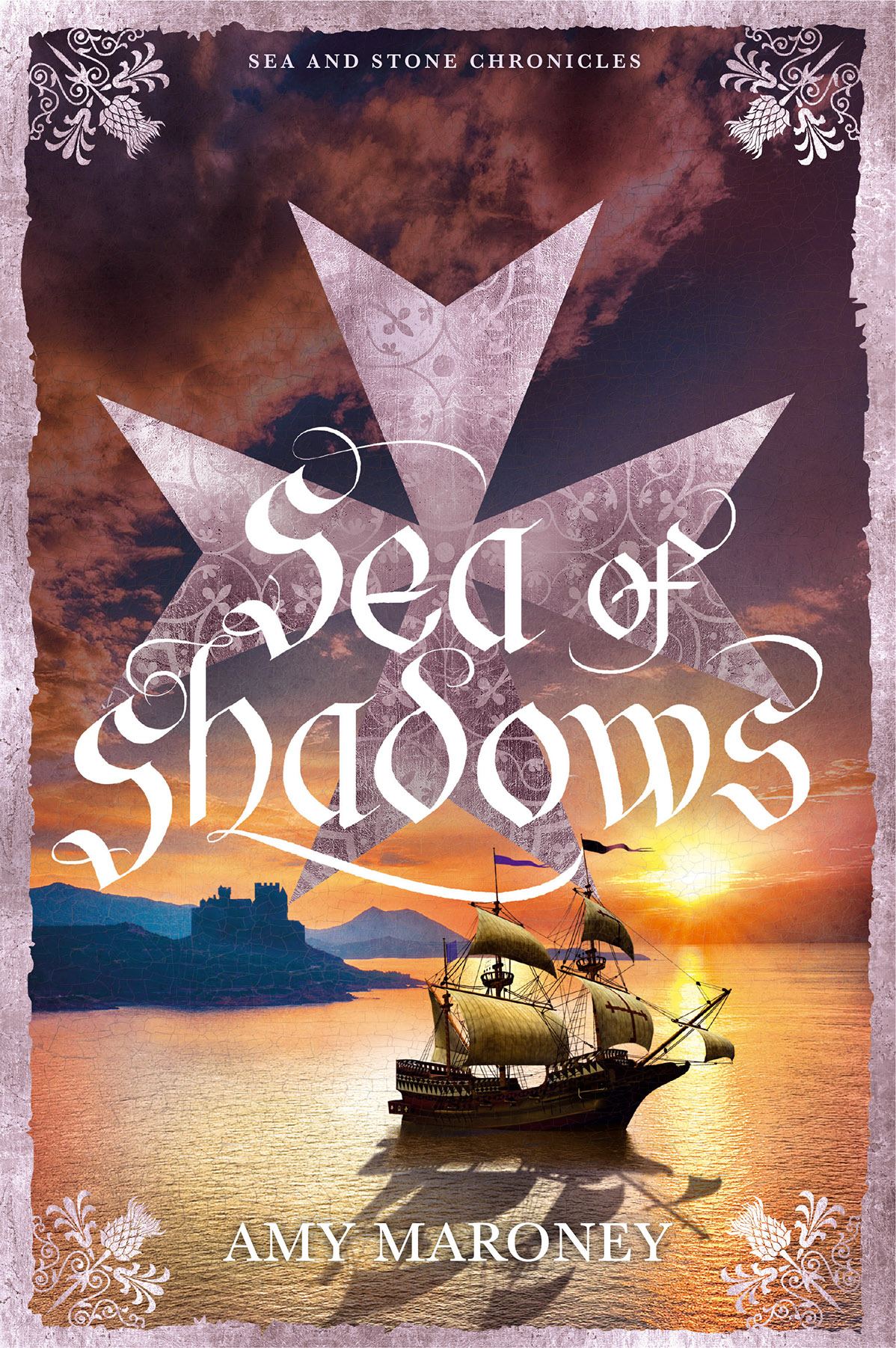
Guest Post: Amy Maroney, author of Sea of Shadows

 It is my absolute delight to welcome author Amy Maroney back to the blog. Amy's new release is called Sea of Shadows and once again she's taking us to Medieval Rhodes. Over to you, Amy:

~~~~~~~~~~~~~~~~~~~~~~

While we rarely hear about women artists working during the medieval and Renaissance eras, they did exist. Though their work was often made anonymously or attributed to the fathers, brothers, and husbands they worked with, we can sometimes find traces of these women in tax rolls and wills. My new novel, Sea of Shadows, stars Anica Foscolo, a gifted woman artist who is the talent behind the oil portraits and frescoes made by her father’s workshop on the island of Rhodes in Renaissance-era Greece. Anica is fictional, but she was inspired by real women. 

In 13th-14th century Paris, for example, women made up about 10 to 15 percent of all taxed individuals. This number included artisans, widows, business owners—any female earning her own taxable income. Illuminators and embroiderers showed up frequently on the tax rolls, as did silk-weavers, brocaders, and textile finishers. Women were accepted into many trade guilds of the time, usually via family members, but some trades had free entry and accepted all who met their requirements. 

Medieval Woman Painting a Woman, by
Giovanni Boccaccio, French National Library

These women mostly worked in obscurity, but there are some examples of women who worked in family art studios and became renowned painters in their own right. Golden Age artist Artemisia Gentileschi is probably the biggest star among them. Her father taught her to paint. She went on to establish her own art studio, securing commissions by wealthy merchants and nobles during her 17th-century career. 

My first historical fiction series, the story of a Renaissance-era female artist and the modern day scholar on her trail, featured a fictional woman painter named Miramonde de Oto. She was based on the real artist Caterina van Hemessen, who worked with her father in his Flanders studio, churning out portraits of wealthy patrons as well as a mesmerizing self-portrait, which she signed. 

Caterina Van Hemessen, Public Domain Image

One of my favorite artists of the Early Modern era is Clara Peeters, master of the still-life painting. She often hid her name or self-portrait within her paintings, which is a trick my fictional artists deploy as well. I love the idea of women artists claiming their work in sly ways, sending a message to viewers decades or centuries in the future. How many more of them are waiting to be found?

Clare Peeters, Self-portrait, Pubic Domain Image

It’s a question that haunts me. I was thrilled to learn recently of a female artist, Agnes van den Bossche, who was a member of the Ghent, Flanders, artists’ guild for over three decades during the 15th century. Her father and brother were master painters. For her part, Agnes painted mostly on cloth. Her only known surviving work is a banner she was commissioned to produce for the city of Ghent. 

The Banner, Image: Wikimedia Commons

Agnes is that rare person—a woman artist of the late medieval/early Renaissance era whose story survives. Most of her contemporaries are lost to history, their voices and legacies relegated to the shadows. As a writer who specializes in stories about forgotten women artists, I hold up Agnes as evidence that the artists I create in my fiction are based on real women, not just my imagination. 

With my new Sea and Stone Chronicles series, I wanted to focus on unsung, unknown women like Agnes van den Bossche. For every Agnes we can point to in the historical record, there must be hundreds who are lost to history. Women who had every bit as much talent as their male counterparts–and, in some cases, more—but were never acknowledged. 

Sea of Shadows, the second book in this series of stand-alone romantic historical suspense novels, stars an unlikely duo. Anica Foscolo, a gifted painter on the Greek island of Rhodes, is the daughter of a Venetian artist and a Greek woman. Drummond Fordun is a fierce Scotsman renowned for his exploits as a privateer serving the Knights Hospitaller of St. John, who are headquartered on Rhodes. When her family’s honor is threatened, Anica reluctantly turns to Drummond for help. There’s just one problem: she never planned to fall in love with her accomplice.  

Like Island of Gold, its predecessor in the Sea and Stone Chronicles, Sea of Shadows explores the shadowy world of the Mediterranean during a time of adventure, war, prosperity, and risk. 

The Colossus of Rhodes - Public Domain Image

Artists and artisans exploited the wealth in Rhodes Town under the rule of the Knights Hospitaller, setting up studios and workshops within the walled city. Gold-beaters, jewelers, textile workers, stoneworkers, and painters were among the creative classes. Italian-trained artists were commissioned by the knights to create frescoes and paintings for their private residences and for chapels and churches on the island. At the same time, the astounding layers of history in Rhodes offered opportunities for entrepreneurs to sell artifacts to collectors from Italy, who traveled to the island seeking treasures for wealthy patrons.

My heroine Anica Foscolo, the unsung talent behind her father’s dazzling portraits, is a product of her environment, and as such she embodies the conflicting loyalties of her time and place. She’s Venetian (not always an advantage for a citizen living under the rule of the Genoa-loving Knights Hospitaller), but she’s also Greek (and, as such, seen as subservient by the Knights Hospitaller).

Rhodes under the rule of the knights was a goldmine of adventure, scandal, love, and divided loyalties, offering rich fodder for a historical novelist. Though I never found evidence of a woman artist working in Rhodes at the time, there was plenty of evidence about male artists who prospered there. So I created Anica in homage to women working in family studios who never made it into the historical record. She gives a voice to the silenced stories of the past—and serves as a reminder that the historical record is full of holes just waiting to be filled.

Sea of Shadows 

1459. A gifted woman artist. A ruthless Scottish privateer. And an audacious plan that throws them together—with dangerous consequences. 

No one on the Greek island of Rhodes suspects Anica is responsible for her Venetian father’s exquisite portraits, least of all her wealthy fiancé. But her father’s vision is failing, and with every passing day it’s more difficult to conceal the truth. 

When their secret is discovered by a powerful knight of the Order of St. John, Anica must act quickly to salvage her father’s honor and her own future. Desperate, she enlists the help of a fierce Scottish privateer named Drummond. Together, they craft a daring plan to restore her father’s sight. 

There’s only one problem—she never imagined falling in love with her accomplice.

Universal Amazon link

Amazon UK

Amazon US

Amazon CA

Amazon AU

About the author:

Amy Maroney studied English Literature at Boston University and worked for many years as a writer and editor of nonfiction. She lives in Oregon, U.S.A. with her family. When she’s not diving down research rabbit holes, she enjoys hiking, dancing, traveling, and reading. Amy is the author of The Miramonde Series, an award-winning historical fiction trilogy about a Renaissance-era female artist and the modern-day scholar on her trail. Her new historical suspense/romance series, Sea and Stone Chronicles, is set in medieval Rhodes and Cyprus.

Social Media Links:

Website

Twitter

Facebook

Instagram

Pinterest

Book Bub

Amazon Author Page

Goodreads


Sunday, 12 September 2021

Interview with author Amy Maroney

Amy Maroney, author of the wonderful Miramonde Series, has a new release, Island of Gold, and it's a slightly new departure for her. I'm delighted to welcome her to the blog today to talk about it.

AM: Hello Annie, and thanks for having me on the blog today!

AW: You are most welcome Amy. I’ve read and enjoyed all the Miramonde Series. Island of Gold is going to take readers not so far away from Mira’s world in terms of period, but it’s certainly a new location. What inspired you to write this new story set in Rhodes?

AM: Island of Gold, the story of a noble French falconer and a spirited merchant’s daughter who seek their fortunes in Rhodes during the rule of the Knights Hospitaller, was inspired by a 2012 visit to the island with my family. We were lucky enough to spend three weeks getting to know the island and its people. Greece is full of lovely islands, but Rhodes is blessed with an abundance of beauty. The sun-baked beaches and limestone cliffs are cooled by afternoon winds that skim over the sea. White-washed villages cling to hillsides overlooking sparkling bays. The forested, hilly interior is a world unto itself, clothed in pine and cypress forests. What makes it truly magical for me, though, are all the layers of history. Ancient temples and toppled statues of Greek goddesses exist alongside crumbling walls and forts built by medieval knights. Ever since that experience, the storyteller in me has longed to go back to Rhodes. And now I have…using my imagination and a tremendous amount of research.

The sea and cliffs Rhodes [Unsplash]

AW: I have holidayed on Rhodes and seen the sites associated with the Knights Hospitaller and now I'm longing to go back! Your Miramonde Series is set in the Pyrenees and features the route the pilgrims took along Camino de Santiago. Were you also able to travel to the Pyrenees and if so can you tell us a little of your experiences there and more about Rhodes?

AM: I was inspired to write the Miramonde Series—the story of a Renaissance-era female artist and the modern-day scholar on her trail—after spending time in the Pyrenees ten years ago. I stumbled upon many trail markers with the distinctive yellow arrow of the Camino de Santiago before I knew anything about the ancient pilgrimage routes. I eventually visited Compostela and the monastery of San Juan de la Peña and walked bits of the trail during dayhikes, but I’ve yet to complete a true Camino experience with backpack and hiking poles. The Pyrenees exerted a magical hold upon me, though—so powerful that it didn’t let me go until I’d written a trilogy set there! It was much like the feeling I got when I explored Rhodes Town that same year. 

Street of the Knights, Rhodes [Unsplash]

No place on Rhodes fascinated me as much as Rhodes Town. The largest community on the island, Rhodes Town has been a thriving port for millennia. In the medieval era, the Knights Hospitaller ruled Rhodes and the surrounding islands from a palace overlooking the bustling harbor. In Rhodes Town as in the Pyrenees, I followed traces of medieval travelers along cobblestone streets and into the ruins of churches. Echoes of their voices lingered in the vaulted corridors of the hospital and the inns that once housed knights and pilgrims. 

I was struck with a desire to dig deeper when I visited the reconstructed palace of the Order of St. John. Wandering through vast, formal chambers, I peeked into a dim corridor where stone tablets carved with European knights’ coats-of-arms leaned against the walls. Staring at those dusty slabs of stone, I wondered who the knights had been. Where had they come from? How did they die? My imagination started a wild spiral. What had it been like for ordinary people living in the knights’ shadow? For women, especially? Who benefited from the Order’s presence? Who suffered? One day, I resolved, I would learn the answers to those questions and more.

Medieval Hospital, Rhodes Town [Unsplash]

AW: I understand that feeling of wanting to know more, something that your modern-day character in the Miramonde books shares! Though the time periods for the two series are similar, I see that there is one major difference in that Island of Gold doesn’t have a dual timeline. Can you talk us through the thought processes that led to one series being dual timeline and one being single timeline?

AM: The Miramonde Series, an art history mystery trilogy, has a dual timeline because I wanted to show how modern art conservation techniques can reveal secrets within paintings that are hundreds of years old. I said to myself, “Imagine a young, female researcher stumbling upon evidence that a five-hundred-year-old painting was created by an unknown woman artist. Imagine her challenging elite art historians who assert that the work was made by a famous man. And imagine taking readers on a journey through time so they learn the story of that unsung artist’s life as it played out centuries ago.” 

As much as I loved researching and writing the series, I was ready to take a break from the dual timeline format when I began planning the Sea and Stone Chronicles (Island of Gold is Book 1 in this new series). I have always enjoyed historical adventure, seafaring, and swashbuckling. The historical action/adventure category of publishing is marketed to men and tends to be heavy on battle scenes and light on strong or interesting female characters. The historical romance category often leaves me wanting more than just romance. I love a great romance, and I enjoy an epic battle scene or swordfight, but I’m more interested in the lives of ordinary people thrust into extraordinary circumstances.  

With this new series, I wanted to combine my favorite aspects of adventure and romance with a sturdy foundation of history. Instead of jumping around in time, I had a strong desire to drop anchor in the fifteenth century and stay awhile.

How women managed to survive and even prosper during the fifteenth century is a question I think about all the time. I’ve been intrigued with that era since I began the research for the Miramonde Series. It’s the end of the medieval period and the beginning of the Renaissance. The ripple effects of the fourteenth-century plague are still being felt all over Europe. The printing press means more people have access to books and learning than ever before. The merchant class is on the rise. Nobles are running out of money. Shipping empires are rising and falling at sea, and the loss of Constantinople to Sultan Mehmed II of Turkey spells doom for the easternmost outposts of Christendom, including Rhodes and Cyprus. That’s rich material to mine for historical fiction. 

Rhodes Town Harbour [Unsplash]

AW: You're right that it's such an interesting period and setting. With one series under your belt and now a new one beginning its journey into the world, I’m interested to know how much of each volume’s story is already in your head when you are writing a series?

AM: I wish I could say I had a concrete plan for each series that I actually stick to when writing, but that’s far from the truth. I usually start with an idea sparked by travel, or  “What if…?” questions that fire my imagination. Setting, characters, and plot begin to unfold as I do more research. The historical nuggets I discover usually make the best plot twists. Truth really is stranger than fiction. 

With this series, I originally envisioned several thriller/mysteries starring one female protagonist, but I changed course during my research. The Sea and Stone Chronicles are historical adventure/romances, and while some characters appear in all the books, each novel stars a different set of protagonists. Rhodes is the primary setting for the first two books, and Cyprus is the main setting for the third book. After these three novels launch, I may return to my plan for the thriller/mystery series, featuring offspring of my Sea and Stone Chronicles characters. As long as fifteenth-century Europe continues to fascinate me, I’ll keep journeying back there for my historical fiction.

AW: That's good to know, as we want to keep reading the books!

AM: Thanks so much for hosting me on the blog today, Annie!

AW: Thank you for chatting today Amy and good luck with the new release.

About the Author:

Amy Maroney studied English Literature at Boston University and worked for many years as a writer and editor of nonfiction. She lives in Oregon, U.S.A. with her family. When she’s not diving down research rabbit holes, she enjoys hiking, dancing, traveling, and reading. Amy is the author of The Miramonde Series, an award-winning historical fiction trilogy about a Renaissance-era female artist and the modern-day scholar on her trail. Her new historical adventure/romance series, Sea and Stone Chronicles, is set in medieval Rhodes and Cyprus.

Readers can connect with Amy:

Website

Twitter

Instagram

Facebook

Pinterest

Buy Island of Gold


Friday, 1 May 2020

Characters and their occupations - 12 authors introduce

Today is traditionally 'Labour Day' in the UK. I asked 11 other authors to introduce one of their characters and their occupation. I hope you take instantly to this varied group and all the buy links are there if you want to read further. (If? Of course you do! 😉)


Pauline Barclay
Hello, I’m Dor, I’ve been asked what my occupation is, my girl says I’m a scrubber, she’s a cheeky mare! Ok, I’m a cleaner and have four jobs that have me rolling my sleeves up! Not glamorous, but it pays the bills, just! One of my cleans is an office, you wouldn’t believe how office folk leave the place, and the little bleeders like their morning joke! I’ll be putting my coat as there’re strolling in. “Lucky you, we’re starting and you’re off to put your feet up.’ I won’t say what I’d like to reply, but with three other places to muck out, it ain't polite! They might all look down their beaks at me, but at the end of the day I was the one who wiped the smile from their faces because sometimes it happens!


The Birthday Card
Web Site
Blog Site
Facebook
Twitter: @paulinembarclay
Instagram @paulinebarclay


Cryssa Bazos
Elizabeth Seton comes from a long line of herbalists and has a talent for the healing arts. Ever since she was a little girl in Weymouth, she planned to follow in her mother’s footsteps and continue to care for the sick who came to their door. Until civil war reared its ugly head and a community was left divided. With her family destroyed, Elizabeth uproots herself to live with her widowed aunt, a healer in her own community. Under the guidance of her aunt, Elizabeth once more explores her art by creating simple syrups, tinctures, salves, and purges. Snakeweed for the ague, willow bark for pain, king’s claver for consumption, and take care not to trod on moonwort lest your horse cast a shoe. The tools of her trade, mortar and pestle, scales and stills, transform herbs and roots into medicine, while her aunt’s receipt book captures generations of experience. 

Traitor’s Knot buy link
Website: https://cryssabazos.com
Twitter (@CryssaBazos)
Facebook


Anna Belfrage
Name: Adam de Guirande, protagonist of In The Shadow of the Storm. Occupation: Knight. Excels at the broadsword, is more than capable with a lance but will admit to being less of an expert with bow and arrow—he has archers to handle such. Recently wed to a lady who is not quite what she seems to be and is finding married life comes with numerous challenges, one of which is having a new person wiggle her way into his heart. Will do anything for his lord and master, Roger Mortimer, which does not necessarily endear him to King Edward II who considers Mortimer a rebel and his greatest enemy. But knights as loyal and honourable as Adam are hard to come by so hanging him may be a waste. Or maybe not—after all, WHO is he loyal to? That perfidious Mortimer or his king? 
Find out more about Anna on her website, check out her Amazon page and connect on FB and Twitter.

Buy In the Shadow of the Storm


Kathryn Gauci 
Sophia Laskaris is a couturier in Constantinople during the last years of the Ottoman Empire. Born into a family of professional embroiderers, she is a woman who is not only creative, but has a head for business too. Her grandmother, Dimitra, one of the first embroiderers to gain the patronage of the Sultan’s family and who took her business to great heights throughout the empire, was the guiding light in her life. Sophia opened up her couture house, La Maison du L’Orient, in Pera, the fashionable European district in the city, at a time when European fashion was becoming popular, but she continued to create designs based on the oriental look and was admired by Parisian designers such as Paul Poiret. She was highly educated, speaking several languages, and politically astute. With the outbreak of the Balkan Wars in 1912 and WWI, she used her work to not only aid Turks in distress, but to gather information for the Greeks who were seeking independence. When the situation deteriorated, she was forced to flee Turkey and reinvent herself as a seamstress in Athens. After the Germans occupied Greece, she drew on her previous background to aid the Resistance.

Buy The Embroiderer 
Website 
Facebook
Twitter
Instagram


Susan Grossey
My narrator Sam Plank’s occupation – that of magistrates’ constable – is central to his life and to my books.  Magistrates’ constables existed for only a short period of policing history: they were used in London during the two decades or so after the Bow Street Runners and before the Metropolitan Police, which was the 1810s and 1820s.  At that time there was little concept of investigation of crime, and none at all of detection.  If you were the victim of a crime and had some idea who had done it, you took your complaint to the local magistrate.  If he thought your claim had merit, he would task one of his constables with executing a warrant to bring the accused in for questioning.  Of course, “my” Sam is much more curious than that and makes a great deal more of his role, taking a particular interest in financial crimes…

Website 
Blog 
I tweet as @ConstablePlank
Monthly Newsletter (for updates & offers) 


Helen Hollick
I was elected King of England in January 1066. It was an honour I did not want, but who else is there able to protect this noble land from those who want to steal our wealth and the Crown for their own?
King Edward died without a son, the only other of royal blood is but a boy with no experience of battle or government. To be King I must ally with the Northern Earls, so I must take their sister to be my Queen. She is a comely lass, but I have a handfasted wife, my beloved Edyth, mother of my children. So, I set her aside for the good of England, for stability and prosperity. Hah! Being King is a privilege you say?  I swear it is not. But I will do my duty and all I can to protect you, my people from the  threatening tyranny of Normandy. Or die trying.

you tube trailer:
Website
Newsletter Subscription
Main Blog
Amazon Author Page 
Twitter: @HelenHollick


Charlene Newcomb 
I thank Mistress Annie from Westminster’s kitchens who invited me here today. I met her when nobles gathered to crown the new king. I was wearing my fancy clothes—stolen, of course—pretending to be a page. Mistress Annie knows I’m a thief living on the streets, sleeping in the eaves of St. Paul’s or here at Westminster many a night, but she doesn’t fault me. She feeds me and my friend now and again, best chicken in garlic and onion sauce served alongside the best gossip. We hear the king, the one called Lionheart, is gathering an army for a pilgrimage to Outremer. Streets of London or camp follower—not much different. Being good with dice, I can win a coin or two. We might pick up some work. I can brush down a palfrey, and Little John is handy with needle and thread. And if we cannot work, there’ll be pockets-a-plenty to pick. 
—meet young Allan and Little John in Men of the Cross


Find Char’s books on Amazon & connect with her on Facebook, Twitter, or Instagram.


Amy Maroney
Artist, healer: Miramonde de Oto was a woman of many skills. Raised in a convent in the medieval Pyrenees, she learned healing remedies from the “mountain folk” and worked during her adolescence in the convent’s infirmary. In her childhood, she used bits of charcoal to draw on the marble step of an old well. When she learned to write, she was tasked with copying and illuminating manuscripts in the convent’s library. Eventually she graduated to painting portraits, thanks to an exceptional art teacher. It wasn’t until catastrophe struck the convent that Miramonde would go on to use her talents in the wider world—and unlike most women artists of her time, she even got paid for it. 

The Girl from Oto is available on Amazon UK and Amazon US
Get a free prequel novella to The Girl from Oto and find Amy’s Blog here. Connect with her on Twitter, Instagram, Pinterest and Facebook


Alison Morton 
Jobs for the girls? Aurelia Mitela has always known she would serve her country in some way; she’s a bone-and-blood Roma Novan, member of a leading family with military commanders, diplomats and councillors among her ancestors. She becomes all three eventually, through AURELIA, NEXUS, INSURRECTIO and RETALIO, but is locked in bitter opposition with her lifelong enemy. Passionate and complex, she will do anything to protect both her daughter and her lover, but despite her innate strength she is crippled by self-doubt.

Soldering requires hard physical and mental training which needs persistence and a love of the life of camaraderie, tough decisions and quick and cool judgement in trying circumstances. In a softer way, so does a diplomat’s life! But being a councillor to a weak ruler requires the toughness of mind and an ability to suppress frustration, something that Aurelia doesn’t always achieve...


Amazon author page  
Buying link
Website
Website link to Aurelia specifically


Elizabeth St John 
Nan Wilmot
aka Anne St.John Lee Wilmot
The Countess of Rochester

Job Title: 
Spymistress to Charles II

Qualifications: 
Ambitious multi-talented outgoing individual with wide-ranging contacts across both Parliamentarian and Royalist departments. Highly skilled in project management, sales, marketing and procurement. Exceptionally discreet, trustworthy and decorous.  Fluent in English and French, with proven communication skills, especially in translations and multi-media. Experienced in multiple coding languages. Good social skills, conversant with inter-departmental protocols and processes and an ability to integrate smoothly within existing teams. Successful problem-solver, works well under stress. A valuable addition to any organization. 

Remuneration: 
Land, rents, livestock, jewelry, titles, perquisites, patronage, manors, arranged marriages, gold.
References: 
Charles II, Oliver Cromwell

Buy at
Amazon and Here
Website


Marian Thorpe 
Sorley (Lord Somhairle of Gundarstorp, to give him his full name) is a scáeli, in the language of Linrathe.
I adapted scáeli from scéalaí, Irish for storyteller. Like the skalds of Scandinavia and the bards of Celtic Britain, Sorley is a historian, a genealogist, a musician and a teacher. He and other scáeli’en hold the collective knowledge of their people. He studied long and hard to reach this position, learning songs and stories since childhood, followed by five years of study under a senior scáeli, then years of wandering, collecting songs and stories to add to his collection. Finally, he sat a formal exam of set pieces plus his own compositions, and built his own ladhar (a lyre) as well. Scáeli’en may wander for years, be attached to a noble house, or be appointed to a Ti’ach, a college, as Sorley is at the end of the series.

Buy Empire's Reckoning
Website
Twitter


Annie Whitehead
Æthelflæd - known to her family as Teasel - has quite an important job. She’s not only the daughter of Alfred the Great, she’s also destined to become ruler of an Anglo-Saxon kingdom. Not her father’s realm, but the neighbouring kingdom of Mercia. These two kingdoms are the only ones left in England still holding out against the Danish ‘Vikings’. Despite all expectations, Æthelflæd becomes a queen in all but name. And there’s the rub. Her job is that of queen, but she doesn’t have the official title. She has to learn to live with a husband for whom she doesn’t initially care, discover how to win over the people of Mercia, and, oh yes, protect Mercia not only from the ‘Vikings’, but, ultimately, her own brother. And all this without an official job contract.

Friday, 5 July 2019

Friday Featured: M

Welcome to Friday Featured. I'm publishing, working from A-Z, a weekly list of authors whose works I think you should check out. Maybe I've read some of their works, maybe I've worked with them on various projects, perhaps their books are on my To-Be-Read pile, or perhaps they are friends of mine who have news that needs to be shared. The only rule here is that it is totally unsolicited. The authors don't know I'm going to feature them, and in that way you'll know that this is simply my honest opinion. If I haven't read their work yet I'll be candid and say so, but at least one book by each of these authors is either on my shelves, or on my Kindle; it might be that I just haven't got to them yet 😊

This week, M: (clicking on the names will take you to the author website; book titles will take you to the books on Amazon)
There's a lot this week, so I'll rattle through them ...


Marie MacPherson  The First Blast of the Trumpet is the first in a trilogy about the famous firebrand John Knox. This book is so much more than that, though, as it not only tells Knox's story but that of his kinswoman, Elisabeth Hepburn, who wants to marry her love, but ends up as a prioress at the time of the Scottish Reformation. I loved this book. It's proper, solid, historical fiction with a cast of rounded characters, great sense of time and place, all backed up with impeccable research which sits lightly on the page, and deftly describes the machinations of the Scottish court during this period. Marie throws just enough Scottish dialect into her dialogue to make the characters come alive. I have the second volume of this trilogy and I can't wait to get stuck into it. 


Sarah Maine  I've had The House Between Tides sitting on my old tablet for a while and had forgotten all about it. I must bump this up the list. "Following the death of her last living relative, Hetty Deveraux leaves London and her strained relationship behind for Muirlan, her ancestral home in Scotland - now in ruins. As Hetty dives headfirst into the repairs, she discovers a shocking secret protected by the house for a hundred years. With only whispered rumours circulating among the local villagers and a handful of leads to guide her, Hetty finds the power of the past is still affecting her present in startling ways." This book was declared Waterstones Scottish Book of the Year 2018 and with over two hundred reviews, it must be doing something right. I can't wait to read it!


Tess Makovesky  I know Tess in real life and have done for a while but I didn't tell her that I'd bought and read Gravy Train on Kindle. It's not my usual read, being a crime 'caper' novel set in modern-day Birmingham, but it's such a good read. Peppered with all sorts of 'low-life' characters, it follows a stash of money as it passes from one hapless wannabe criminal to the next. There is genuine pathos in some scenes, some genuinely nasty and horrifying characters and then there's Sandra, whose life is all about the ever-so-nearly moments but she needs the help of her creepy 'Uncle' to help her succeed. The author adds some really comedic moments into the story but there are some dark scenes too. I found myself rooting for Sandra and her dreams for a better life...


Amy Maroney  "Renaissance-era artist Mira grows up in a Pyrenees convent believing she is an orphan. When tragedy strikes, Mira learns the devastating truth about her own origins. But will she find the strength to face those who would destroy her? 500 years later, art scholar Zari unearths traces of a mysterious woman named Mira in two 16th-century portraits. Obsessed, Zari tracks Mira through the great cities of Europe to the pilgrim’s route of Camino de Santiago—and is stunned by what she finds. But will her discovery be enough to bring Mira’s story to light?" The Girl From Oto is simply a stunning and delightful read. An original idea, part historical fiction, but with a dual timeline, it's skilfully plotted and it was a joy to read. I gave it five stars in my review.


Milana Marsenich If I were pushed to compile a top ten of books I've read this year, I'm confident that Copper Sky would occupy the top slot (although, the year is only half over, so you never know). On the face of it, this is a bleak tale about the harsh life in an early 20th-Century copper mining town in Montana. Kaly remembers her sister's death, but she also half-remembers that something terrible happened to her that day, too. Kaly wants to make a life her unborn child, while her friend Malika wants to escape the life which has been mapped out for her. Danger lurks, and not just in the daily hazards at the mine. The writing is exquisite, the setting and period feel are spot on and, though the characters' lives are bleak, there is a glimmer of hope running through this tale.


Jennie Marsland  About three or four years ago, before I really got to grips with Social Media, I took up the offer of reading a copy of Flight, the final part of a series. I thoroughly enjoyed this story about Georgie, who meets an ex-aviator from WWI. I found the history of turn-of-the-century Halifax fascinating, and the hopes and dreams of the young folk who lived through the war and dreamed of a brighter future was engaging and well written. Because this was a 'freebie' I read it as a standalone, but I'd recommend starting at the beginning and getting to know the characters. (Each book focuses on a different character, but in terms of time they run chronologically.) Jennie writes with a lightness of touch that makes this easy, yet still at times thought-provoking, reading. 


Kathleen McGurl  I read The Emerald Comb on Kindle, and here's a portion of my 5* review of this dual timeline book which involves a modern-day woman trying to solve the mysteries of the past: The 21stc sections are written in a light, contemporary style, with cultural references that will, in years to come, put them firmly in their time setting. A different voice is used for the earlier time, and this different narration style works well as a device. There's no jarring as we go from old to modern times and the difference in tone eases the switch from one to the other. I was able to read this book quickly without skipping any of it, a testament to Ms McGurl's writing skills, which she makes seem so effortless. The plot is worked out so precisely that not a single detail is wasted - everything matters & all is tied up at the end.


Jean Mead  Every so often, authors set up discounts on the price of their books and I downloaded Hannah while it was on special offer. It's sitting on my Kindle, although I have sneaked a look at the opening pages, and it promises to be a great read: From what I've gathered from the blurb, the year is 1823 when the story begins in the grand mansion, Croxton Hall in Dorset. This is where fifteen-year old Hannah, defying her father, leaves home to become a kitchen maid, and the book goes on to tell a sweeping tale of love, loss and betrayal which sees Hannah finding herself staring at the shadow of the hangman's noose. The story takes the reader from the glorious Dorset Downs to the dripping walls of a filthy prison and beyond. I'm really looking forward to settling down with this one.


Sue Moorcroft  A Summer to Remember was a joy for me to read on Kindle, since it's set in an area of Norfolk with which I'm very familiar. It's the perfect holiday read, beginning with a jilted bridegroom, his brother who had a bit of a thing going with the bride's cousin and now, after being dumped by her boyfriend in the worst way possible, that cousin has come back to the sleepy Norfolk village to lick her wounds. Unfortunately, in so doing, she opens up a lot of old wounds, too. Some of the locals embrace her, some of them hate her for reminding them of the wedding that never was, oh and there's some unfinished business on the romance front... memorable characters, wonderful scenery, and a believable tale of every day life, albeit one laced with drama. Loved it.


Toni Mount I won a paperback copy of this book and what a delight it was to read Medieval Medicine by Toni Mount, a medievalist who really knows her stuff. I'm keeping it on my research shelves because it is packed full of really useful information about medical practice in the middle ages. However, it is also a really accessible read, and Toni has a lovely way with words; some of her asides are very droll indeed. As I said in my review, "everything is here: from the diagnosis, treatments and medical knowledge to the various occupations and titles of those who practised medicine. The notes are detailed and helpful, with sources listed and page numbers given for further reading." Toni has written a number of nonfiction books and also writes a fiction series, medieval thrillers featuring Seb Foxley. 


April Munday I 'met' April on Twitter and I love her blog posts where she explains, among other things, the anatomy of a castle. Beloved Besieged is a great book which is clearly a product of meticulous research. "Limoges 1364 - After Elaine is rescued from a rioting mob by Joscelin, a handsome English pilgrim, neither expects to see the other again. Out of sight proves not to be out of mind, however, nor out of heart. Their unspoken love for one another continues to grow over the years they’re apart. When their paths cross again, Joscelin is a knight in the army laying siege to Elaine’s home. He has to get to her before anyone can harm her… or worse." I liked the way the characters sat firmly within their time period and I felt that in particular, Joscelin's inner struggles made him very much a man of his time. Beautifully researched and written.


And that's it. Gosh, what is it about the letter M that produces such amazing authors? I hope you find your next good read from this list. Join me next time for N-P 😊