New Release: Queen Anna by Tony Riches

  Author Tony Riches has a new release... A crown won in the eye of a storm. A queen who refuses to be broken... Princess Anna of Denmark s...

Showing posts with label Pirates. Show all posts

Friday, 17 May 2024

Out Today - A Memory of Murder by Helen Hollick

Today is publication day for A Memory of Murder by Helen Hollick, the fifth in her series of Jan Christopher Cosy Murder Mysteries.


You might know that Helen is a prolific and hugely successful author of Historical Fiction, including a series about King Arthur and her Seawitch pirate novels. Lately she's branched out into cosy murder stories set in the 1970s.

Helen had wanted to become a journalist when leaving secondary school, but the careers advice was not helpful and instead, she worked in a Chingford library where she stayed for 13 years although she was not very happy there; what she really wanted to do was write. Working at the library of course gave her access to books, and it was there that she came across the Roman historical novels of Rosemary Sutcliff, the Arthurian trilogy by Mary Stewart, and the historian Geoffrey Ashe. She was hooked on Roman Britain - and King Arthur!

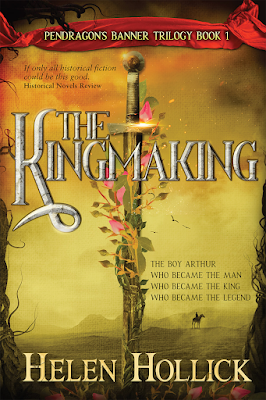
Reading everything she could, she realised that she had her own characters of Arthur and Gwenhwyfar (Guinevere), and wanted to tell their stories. She found an agent who placed her with William Heinemann and the first in her Aruthurian Trilogy was published just after her fortieth birthday.

Since then, Helen has had USA Today bestseller success with her novel about Queen Emma, and also written about Harold Godwineson. 


For the last few years she has been taking her readers on high seas adventures with her pirate character Jesamiah Acorne in the highly acclaimed Seawitch novels but, during lockdown in 2020, her writing went in seemingly a very different direction.


But it's not such a leap as you might suppose, for Jan Christopher works in a library too, and many of the incidents and escapades related in the books really happened, as Helen draws on her memories of her years working in Chingford Library.

There, of course, the similarity ends for, unlike Jan, Helen was never witness to murder (thank goodness). All five of the books sit beautifully in their 1970s setting and evoke the sights, sounds, smells and social mores of that era. Jan's uncle is a Detective Chief Inspector, and her guardian since Jan's father was killed when she was young.

Those who've read the previous four books will know this, but in Book Five, we learn more about Jan's earlier life and about her parents. I'll say no more, for fear of spoilers, but I will tell those who already count these books among their favourites, that the gorgeous and glorious Laurie, Detective Sergeant and Jan's fiancé, is still on the scene!

Here's the blurb:

Easter 1973.

The North London library where Jan Christopher works is in upheaval because the decorators are in to spruce the place up, but there is more for her policeman uncle, DCI Toby Christopher, and her fiancé, DS Laurie Walker to worry about than a few inconvenient pots of paint.

An eleven-year-old girl has not returned home after school, and strange ‘gifts’ are being surreptitiously left for the detective chief inspector’s family to find. 

Could these items have anything to do with the unsolved murder, fifteen years ago, of Jan’s policeman father?

As with all of the books in the series, you can be sure there are plenty of red herrings along the way...

A Memory of Murder can be bought HERE

and you can find all of Helen's books HERE

Helen's website is HERE

and you can find her on Social Media:


Praise for earlier books in the series:

“Well-paced with action interspersed with red herrings, shady suspects, and some nice passages of information which, ultimately are inconsequential, but are actually very interesting. Characterisations are excellent – especially Aunt Madge! I love Aunt Madge!”

“An enjoyable read with a twist in who done it. I spent the entire read trying to decide what was a clue and what wasn’t... Kept me thinking. I call that a success.”

“A delicious distraction... What a lovely way to spend an afternoon!”

Wednesday, 15 August 2018

Review: Pirates - Truth and Tales - by Helen Hollick

Let me start this review with a confession. I've not ever been a huge fan of pirates. I watched the first Pirates of the Caribbean film and couldn't even follow the plot. So I wasn't sure how I'd react to this book. 

I needn't have worried. For a start, the book sets the reader very straight about the difference between what we think we know about pirates, and the historical truth.

Ms Hollick has written a series of novels about pirates, or, more correctly, about a particular pirate: Jesemiah Acorne. No one could, or should, write historical novels without doing thorough research, and it's clear that the author has done her homework.


This book gives a detailed, informative and interesting history of piracy. Sometimes of piracy in general, and sometimes giving short biographies of some of the more famous names - Calico Jack, Mary Read, Anne Bonny - and some less well-knowns - Jan Baert, William Fly.

But this book is not just a good, solid, well-researched book about the history of pirates. It is also a book which you can dip in and out of, including as it does excerpts from novels, recipes - for Damson Rum, yum! - sea shanties, a glossary of pirate 'speak', of terminology, and lists of pirates' ships and their colours.

Packed full of interesting information, the book gives the reader plenty of  'Well, I didn't know that!' moments. I rather regret that I was on my own when I was reading it, because there were many times when I wanted to say to someone, 'Did you know the origin of the phrase...' 

There were many times when I also chuckled aloud. Not just at the information, but at the light delivery. Ms Hollick is such an enthusiastic writer, and the book's tone is warm, friendly, but never less than informative.

Every aspect of this life is explored - the depiction of pirates in film, television and novels, what 'gaol' meant, the difference between sailors and tars, how they navigated across the seas. We even learn why pirates all seem to be portrayed as speaking in the traditional 'arrr' way. It's all fascinating stuff.

Ms Hollick has pulled off a difficult feat, giving us solid history and an accessible and highly entertaining read. So, although I began thinking I wasn't a fan of pirates, I can't recommend this book highly enough. It even gives a history of rum. Cheers!


Helen recently took off on a voyage of her own, not across the high seas, but across the blogosphere. She weighed anchor on this blog on August 3rd, where she talked about the Vikings. You can read that post HERE where you'll also find links to all the other ports of call on her voyage.

And you can buy Pirates, and all of Helen's novels at http://viewauthor.at/HelenHollick

Friday, 3 August 2018

The Vikings: Raiders or Pirates?

I'm delighted to host author Helen Hollick as she embarks on a voyage across the blogosphere.


Helen has written a series of nautical Voyages based around her fictional pirate, Captain Jesamiah Acorne and his ship, Sea Witch, but her latest UK release in paperback is a non-fiction book – Pirates: Truth and Tales published by Amberley Press, which explores our fascination with the real pirates and those who are favourites in fiction. Today, Helen drops anchor for another interesting addition to her on-line two-week Voyage around the Blogs with a pirate or two for company…


~~~~~~~~~~~~~~~~~~~~~~~~~~~

Raiders? Pirates? Sea Wolves? For the people concerned at the time, I doubt they particularly cared what these terrifying men from the sea were called! To the Anglo-Saxons they were ‘the Danes.’ For the Franks, ‘Northmen’; to the Irish, just ‘foreigners.’ The Slavs knew them as ‘Rus,’ from which we get ‘Russian,’ and the Spanish kept it simple: they were ‘The Heathens.’ Between themselves the ‘Vikings’ were named for the area they came from. What they were not called by their contemporaries was ‘Vikings.’ That term came to be used somewhat later in history.

The word ‘i-viking’ means something like ‘to go raiding’, and basically that is what these skilled seamen from the Scandinavian countries were, expert seamen and part-time raiders. Unlike the Johnny Depp/Jack Sparrow type Pirates of the Caribbean of the early 1700s, the Vikings did not roam the seas in deliberate search of merchant ships, or heavily-laden Spanish treasure ships to prey upon. Nor were the Vikings like the eighteenth century pirates who were deserters and ne-er-do-wells. The Vikings were skilled warriors and even more skilled sailors, with a superb knowledge of seamanship and navigation. They came from Norway, Sweden and Denmark and were a massive nuisance for England for three centuries from about the mid-700s. (They were known and feared in many other countries as well, but I’m sticking to England for this article.) They were finally ‘tamed’ (as far as England was concerned) because of the Norman Conquest by Duke William of Normandy when he won at the Battle of Hastings in 1066. Incidentally, ‘Norman’ derives from 'North Man’, the Normans were, in fact, descendants of Viking raiders.


In 1002, King Æthelred II (the Unready) took Emma, the daughter of Duke Richard I of Normandy, as his wife. His intention was to seal a treaty to ensure that Normandy would cease allowing Vikings to overwinter along the Normandy coast from where they preyed on England. The idea did not work. Æthelred ended up paying the Danes more and more money to ‘go away’ and eventually one Danish King, Cnut, ended up as King of England… married to Æthelred’s widow. Her son by Æthelred, in turn, became King of England in 1052. His name was Edward – later known as the Confessor. 

The Anglo-Saxon Chronicle makes much of one of the first (recorded) raids on the English coast by Vikings when it mentions: “…on the ides of June the harrying heathen destroyed God’s church on Lindisfarne by rapine and slaughter.” This was in 793, with Lindisfarne one of the holiest places outside of Rome. The attack was witnessed by a monk, Simon of Durham, “… laid everything waste with grievous plundering, trampled the holy places with polluted feet, dug up the altars and seized all the treasures of the holy church. They killed some of the brothers; some they took away with them in fetters; many they drove out, naked and loaded with insults; and some they drowned in the sea.”

Whether using the term ‘raiding’ or ‘piracy’, the Vikings never intentionally aimed at desecrating the Christian God. Religion had nothing to do with it: a stockpile of gold and riches, virtually undefended, was the sole lure.

In 795, Iona, an island off the west coast of Scotland, was raided, then again in 802 and 806, the latter of which saw sixty-eight monks and laymen slaughtered. Ireland, Wales and the other islands of Scotland were also frequently raided. One of the Norse raiders who plundered the Hebrides was Svein Asleifarson. After his raiding on the islands, he sailed to Dublin, capturing two merchant ships en-route and relieving them of their cargo – fine quality broadcloth. Ah, now that was piracy!

Those early raids soon expanded into actual settlement when the Norse started to establish suitable bases for overwintering; places like York, Dublin, Normandy and Novgorod. Their ships – the Longships – were well-built powerful craft with a low, sleek appearance that could glide through the sea or along shallow rivers. They could be easily beached and were light enough to be carried over land if necessary. A rudder was on the steerboard side (which later became ‘starboard’) and had a single mast and sail. No wind? The crew rowed. 

To the astonishment of some experimental archaeologists who had re-crated a full-size longship, during trials they discovered that these ships were capable of being very fast, in fact the accompanying in-shore motor-powered lifeboat had to radio them to slow down – they couldn’t keep up! It was also discovered that in the right conditions and if enough speed was reached the longboat would aquaplane for several yards: row, row, row… skim… row, row, row…skim… 
I think the word formidable fits in here rather nicely!

But were the Vikings opportunists raiders, or were they ruffian pirates? I’ll leave you to decide.

© Helen Hollick

Pirates: Truth And Tales published in paperback in the UK July 2018 and November 2018 in the US – but available for pre-order.

Buy the Books: Amazon Author Page (Universal Link) 
http://viewauthor.at/HelenHollick

Sign up for Helen’s Newsletter and be entered for an annual prize draw. 
One name ‘picked from the hat’ in December will win a £10/$10 Amazon gift voucher.
Subscribe here: http://tinyletter.com/HelenHollick

LINKS:
Website: www.helenhollick.net
Main Blog: www.ofhistoryandkings.blogspot.com
Facebook: www.facebook.com/HelenHollickAuthor 
Twitter: @HelenHollick
Discovering Diamonds: https://discoveringdiamonds.blogspot.co.uk/

Follow Helen’s Tour:
These links will take you to the Home Page of each blog host – Helen says thank you for their interest and enthusiasm! For exact URL links to each article go to Helen’s website:  www.helenhollick.net  which will be updated every day of the tour.


30th July: Cryssa Bazos Dropping Anchor to Talk About Pirates
31st July: Anna Belfrage  Ships That Pass…
1st August: Carolyn Hughes Pirates of the Middle Ages
2nd August: Alison Morton From Pirate to Emperor
3rd August: Annie Whitehead The Vikings: Raiders or Pirates?
4th August: Tony Riches An Interview With Helen Hollick (and maybe a couple of pirates thrown in for good measure?)
5th August: Lucienne Boyce Anne and Mary. Pirates.
6th August: Laura Pilli Why Pirates?
7th August: Mary Tod That Essential Element… For A Pirate. 
8th August: Pauline Barclay Writing Non-Fiction. How Hard Can It Be?    
9th August: Nicola Smith Pirates: The Tales Mixed With The Truth
10th August: Christoph Fischer In The Shadow Of The Gallows
11th August: Debdatta What Is It About Pirates?
12th August: Discovering Diamonds It’s Been An Interesting Voyage…
13th August: Sarah Greenwood Amberley Books blog Pirates: The Truth and the Tales 
14th August: Antoine Vanner The Man Who Knew About Pirates


ABOUT HELEN:


Helen moved from London in 2013 and now lives with her family in North Devon, in an eighteenth century farmhouse. First published in 1994, her passion now is her pirate character, Captain Jesamiah Acorne of the nautical adventure series, The Sea Witch Voyages. Helen became a USA Today Bestseller with her historical novel, The Forever Queen (UK title A Hollow Crown) the story of Saxon Queen, Emma of Normandy. Her novel Harold the King (US title I Am The Chosen King) explores the events that led to the 1066 Battle of Hastings. Her Pendragon’s Banner Trilogy, set in the fifth century, is widely praised as a more down-to-earth historical version of the Arthurian legend. She has written three non-fiction books, Pirates: Truth and Tales, Smugglers in Fact and Fiction (to be published 2019) and as a supporter of indie writers, co-wrote Discovering the Diamond with her editor, Jo Field, a short advice guide for new writers. She runs the Discovering Diamonds review blog for historical fiction assisted by a team of enthusiastic reviewers.  
Helen is published in various languages.