New Release: Queen Anna by Tony Riches

  Author Tony Riches has a new release... A crown won in the eye of a storm. A queen who refuses to be broken... Princess Anna of Denmark s...

Showing posts with label Elizabeth St John. Show all posts

Monday, 3 July 2023

The Godmother's Secret - Out now in Audio Book


The Godmother's Secret is out in audio book now:


And author Elizabeth St John has an extra connection with her characters, beyond the usual relationship that authors have with their 'people'. She explains: 

"Writing about my ancestors has always given me an extra level of immersion when researching the places they knew and loved. Visiting Bolton Castle during the Medieval Music Festival was a highlight of my journey with The Godmother's Secret, and I'll never forget standing in the castle gardens watching a full moon rise over the valley, hearing the music of a hurdy-gurdy and drums drifting from the candlelit windows. I used that experience in several scenes as I wrote the novel, and when I came to narrate it, I stepped into my heroine's life and my words became hers. Reading the audiobook was an amazing experience; as a writer we strive to place ourselves within the words; narration gave me an unexpected deeper connection that I hope listeners will enjoy."


Book Title: The Godmother’s Secret

Author:  Elizabeth St.John

Narrator: Elizabeth St.John

Publication Date: 4th October, 2022 (print)

Publication Date: 27th June, 2023 (audio)

Publisher: Falcon Historical (print)

Publisher: Tantor Media (audio)

Page Length: 361 pages

Audio Length: 11 hours 59 minutes

Genre: Historical Fiction

Availability: EBook, Paperback, Audio Book


SAMPLE AUDIO BOOK

https://tinyurl.com/2lrbp2tv


Praise for The Godmother’s Secret

"An extremely well-written book with depth and complexity to the main characters. The author says she wanted to write a book about family love and tolerance, and a woman's loyalty and courage. She has done so. This is the best book I've read in ages!"

The Ricardian Bulletin, Richard III Society

"The authenticity and historical research displayed within this story is immense and exquisite. Ms. St. John is sure to be a newfound favorite for fans of not only this fractious time in English history, but of all historical fans who adore rich, immersive prose."

Historical Fiction Company 2022 Book of the Year

"A very enjoyable read. The historical veracity is impeccable, and Elysabeth is a likeable, admirable character who faces interesting dilemmas with love and courage."

Historical Novel Society

*****

If you knew the fate of the Princes in the Tower, would you tell? Or forever keep the secret?

May 1483: The Tower of London. When King Edward IV dies and Lady Elysabeth Scrope delivers her young godson, Edward V, into the Tower of London to prepare for his coronation, she is engulfed in political turmoil. Within months, the prince and his brother have disappeared, Richard III is declared king, and Elysabeth’s sister Margaret Beaufort conspires with her son Henry Tudor to invade England and claim the throne.

Desperate to protect her godson, Elysabeth battles the intrigue, betrayal, and power of the last medieval court, defying her Yorkist husband and her Lancastrian sister under her godmother’s sacred oath to keep Prince Edward safe. Bound by blood and rent by honour, Elysabeth is torn between King Richard and Margaret Beaufort, knowing that if her loyalty is questioned, she is in peril of losing everything—including her life.

Were the princes murdered by their uncle, Richard III? Did Margaret Beaufort mastermind their disappearance to usher in the Tudor dynasty? Or did the young boys vanish for their own safety? Of anyone at the royal court, Elysabeth has the most to lose–and the most to gain–by keeping secret the fate of the Princes in the Tower.

Inspired by England’s most enduring historical mystery, Elizabeth St.John blends her family history with known facts and centuries of speculation to create an intriguing story about what happened to the Princes in the Tower.

Buy Links:

AUDIO BOOK: 

https://geni.us/TGSAudible

Available on Kindle Unlimited

Universal Link: https://geni.us/GodmothersSecret


Author Bio:

Elizabeth St.John’s critically acclaimed historical fiction novels tell the stories of her ancestors: extraordinary women whose intriguing kinship with England's kings and queens brings an intimately unique perspective to Medieval, Tudor, and Stuart times.

Inspired by family archives and residences from Lydiard Park to the Tower of London, Elizabeth spends much of her time exploring ancestral portraits, diaries, and lost gardens. And encountering the occasional ghost. But that’s another story.

Living between California, England, and the past, Elizabeth is the International Ambassador for The Friends of Lydiard Park, an English charity dedicated to conserving and enhancing this beautiful centuries-old country house and park. As a curator for The Lydiard Archives, she is constantly looking for an undiscovered treasure to inspire her next novel.

Elizabeth's books include her trilogy, The Lydiard Chronicles, set in 17th Century England during the Civil War, and her newest release, The Godmother's Secret, which explores the medieval mystery of the missing Princes in the Tower of London.

Social Media Links:

Website:  http://www.elizabethjstjohn.com/

Twitter:  https://twitter.com/ElizStJohn

Facebook:  https://www.facebook.com/ElizabethJStJohn

LinkedIn: https://www.linkedin.com/in/elizabethjstjohn/

Instagram: https://www.instagram.com/elizabethjstjohn/

Book Bub: https://www.bookbub.com/authors/elizabeth-st-john

Amazon Author Page: https://geni.us/AmazonElizabethStJohn

Goodreads: https://geni.us/GoodreadsElizStJohn


You can read a guest post from Elizabeth St John, where she talks about the story behind the book, HERE


Monday, 3 October 2022

Guest Post: Elizabeth St John

Today I am delighted to hand the blog over to Elizabeth St John, whose new historical novel, The Godmother's Secret, is published today. Over to you Elizabeth:

***

In a complete moment of serendipity, I discovered that a 15th century ancestress, Elysabeth St.John, was the godmother to Edward V, the eldest brother of the missing Princes in the Tower. When I was looking for inspiration for my new book, The Godmother’s Secret, I literally entered my own name into our digitised family tree to see who else was recorded. Several “Elizabeths” popped up – Victorian, Georgian, Tudor women; and then I was so excited to find an Elysabeth St.John who lived during the late 1400s – and over the moon when I discovered she was the godmother to Edward V. Surely Elysabeth, above anyone else, would know what happened to those poor boys?

Elysabeth Scrope's Appointment to Attend Elizabeth Woodville

According to a manuscript in the National Archives, Henry VI paid ten pounds to ‘our wellbeloved Ladie Elizabeth Scroop for attendance by our commandment on Elizabeth, late calling her[self] Queen’ during her confinement; upon the birth of Edward V, Elizabeth was appointed his godmother. In medieval times, a godmother was considered a blood relative, and was responsible for the spiritual wellbeing and security of their godchild. Where the history gets interesting is Elysabeth St.John was also the half-sister to Margaret Beaufort, mother of Henry VII. Elysabeth’s husband, Lord John Scrope, was a close ally and relative of Richard III. Margaret was married to Thomas Stanley, a powerful northern lord and ally of Edward IV and Richard III. So not only was Elysabeth (a Lancastrian) godmother to the York heir, and married to a fervent York supporter, she was also aunt to the Tudor claimant. For anyone familiar with the Wars of the Roses, and the ultimate battle at Bosworth Field, you’ll know how that worked out. Talk about family feuds! 

My novel’s plot revolves around Elysabeth’s vow as godmother and her desperate efforts to protect her 12-year-old godson, Edward V, from the intrigue and betrayal that surrounds him after she delivers him to the Tower of London for his coronation.  He was automatically king upon the death of his Edward IV (“the king never dies”).  Throughout The Godmother’s Secret, Elysabeth is navigating her own conflict, upholding her loyalty to both her husband and her sister as competing factions battle for the throne. More than anything, Elysabeth defies the bounds of blood and loyalty to make her own decisions for her godson’s survival in a hostile medieval world where women had little authority.

This excerpt is the opening chapter of The Godmother’s Secret, as Elysabeth arrives to join Elizabeth Woodville in sanctuary at Westminster Abbey.

Bolton Castle, Elysabeth's Home

Chapter One

November 1470 | Westminster Abbey

A secret has been conceived . . .

“Entry, in the name of God and King Henry!” My guard clouts the iron-clad door of Cheyneygates, challenging the sanctuary of Westminster Abbey. “The Lady Elysabeth Scrope demands entry!”

A murther of crows startles from the gables, cawing and whirling around my head and circling up into the clouded heavens. I join three fingers in the holy trinity and cross myself; head, chest, sinister and dexter. These ancient purveyors of death do not disturb me, for I have not survived this war to be hindered by a superstition. If there were a crow for every dead soldier, England would be a huge raucous rookery. But it never hurts to invoke God’s protection. The crows swoop and squabble and alight singly among the gargoyles on the parapets of the soot-stained Abbey. Like the granite tors of my Yorkshire home, these walls are impenetrable and inaccessible. And just as hostile. God offers protection to all who claim sanctuary. And men erect walls to keep them safe.

No stirring from within. I sigh. Not unexpected. “Knock again,” I command the guard. “Let them know their visitors will not leave.”

Abbot's House, Westminster

The waning October afternoon trickles shadows into the well of the courtyard. I pull my cloak closer, thankful I had chosen my finest weave to keep the warmth in and the damp out. The sun had shone golden when we rode out from London, but upon reaching Westminster we collided with the rain clouds streaming in from the west. 

Fallen mulberry leaves clog the stone steps rising before me, rotting unswept in the hollows. Someone isn’t taking care of the abbot’s house. It is clear that no one has left nor entered for a while. The guard’s hammering is unanswered, and yet to the right of the door a candle flame glimmers through a browed window and a shadow flits elusively. 

I push back my hood, and a spatter of rain needles my face. Here, gatekeeper. Here's reassurance I bear your fugitive no threat. I am of middling age, graceful, fair of face, my countenance pleasing, I’ve heard say. Hardly a threat.

The rain unfurls in sheets. I raise my voice. “I am not asking the queen to break sanctuary.” God knows the wretched woman would make it easier on all of us if she did. I motion the guard aside and edge up the slippery steps to the door. “I am here to join her.” My voice competes with a dripping gutter and gets lost under the pitter-patter.

At the foot of the steps, my stepdaughter, Meg Zouche, hums with a redhead’s restless energy; her curly hair springs wildly from her hood, laced with jeweled droplets of Thames mist. “The queen thinks to defy fate with a barred door.” Meg scowls at the blank and blackened oak. 

“She will admit us. Eventually. Even one such as she cannot birth her child alone,” I reply. “I may not be her choice for an attendant, but a captive has no say in their guard.” Temper’s blood warms my cheeks. I stand resolute at the door, ignoring the invisible eyes taking my measure. If this time in sanctuary is to be the battle of wills I anticipate, then I must win the first foray. I plant my feet in the composting leaves, ignore the damp seeping from the stone into the soles of my boots, and wait. 

Bolts grate top and bottom, and the door creaks open. I swallow a last breath of rain-washed air, hoarding the fresh scent for the stifling weeks to come, for the queen’s confinement shapes my own prison sentence. Reaching for Meg’s warm hand, I cross the threshold into the abbot’s house. The splashing steps of our guard fades, his duty done, mine just beginning. And if I fail and the child dies, I will be shown no mercy from Henry, the king that rules, nor Edward, the king in exile. 

We are herded like moorland sheep into the cramped entry corridor, and the steward squints down his drip-tipped nose and sniffs. Meg glares back at him until he drops his gaze. She may be only nineteen, but she has been mine since she was two years of age, and I have trained her to run a great household. She will brook no truck with an insolent servant. Let Meg practice her learnings on the poor man; he is, after all, the enemy.

“Escort my mother to the queen,” Meg commands, “and then show me our lodgings.”

He grudgingly dips his head. “Wait here, Dame Zouche.” 

So the household expects our arrival. They just don’t choose to welcome us. Of course, there is little that will escape the queen, for certainly she has her spies and informers even as she invokes sanctuary to protect her unborn child. 

“This way, Lady Scrope.” 

I kiss Meg's warm cheek. “Make friends with him, Meg,” I whisper. “We’re going to need all the help we can muster. I'll return shortly.”

She grins and winks. “Bon chance, Belle-maman.” 

The steward sets off at a brisk trot through a passage that runs alongside the entry courtyard. He does not look back to see if I keep up nor to extend me the courtesy of a deferential bow nor even a head tilt that my rank demands. So. This is how we will engage. 

He leaves me at the open door to a dim chamber, and I pause to let my eyes adjust to the shadows and to reclaim my dignity. I am aware that whoever is in the room sees me before I see them. 

The lofty wood panelling is underlit by half-burned candles struggling in the damp air. At the end of the chamber is a diamond-paned window, beyond which the Abbey lurks, blocking the waning light. Resting in a high-backed chair before the hearth, her pure profile dark against the blue flames of a meagre fire, is Queen Elizabeth—I still think of her as Elizabeth Woodville—her belly swollen under a beaver-fur mantle. Three little girls huddle on red velvet prayer cushions at her feet, the youngest child perhaps eighteen months.

So this is the commoner queen and her brace of healthy children. Yet still no male heir to claim the throne. What are the odds this next child is a boy? High, I reckon. Especially given the wellspring of prayers God must be receiving daily from the queen and her followers.


***

If you knew the fate of the Princes in the Tower, would you tell? Or forever keep the secret?

May 1483: The Tower of London. When King Edward IV dies and Lady Elysabeth Scrope delivers her young godson, Edward V, into the Tower of London to prepare for his coronation, she is engulfed in political turmoil. Within months, the prince and his brother have disappeared, Richard III is declared king, and Elysabeth’s sister Margaret Beaufort conspires with her son Henry Tudor to invade England and claim the throne.

Desperate to protect her godson, Elysabeth battles the intrigue, betrayal, and power of the last medieval court, defying her Yorkist husband and her Lancastrian sister under her godmother’s sacred oath to keep Prince Edward safe. Bound by blood and rent by honour, Elysabeth is torn between King Richard and Margaret Beaufort, knowing that if her loyalty is questioned, she is in peril of losing everything—including her life.

Were the princes murdered by their uncle, Richard III? Did Margaret Beaufort mastermind their disappearance to usher in the Tudor dynasty? Or did the young boys vanish for their own safety? Of anyone at the royal court, Elysabeth has the most to lose–and the most to gain–by keeping secret the fate of the Princes in the Tower.

Inspired by England’s most enduring historical mystery, Elizabeth St.John blends her family history with known facts and centuries of speculation to create an intriguing story about what happened to the Princes in the Tower.

Buy Links:

Available on Kindle Unlimited


Author Bio:

Elizabeth St.John’s critically acclaimed novels tell the true stories of her ancestors: extraordinary women whose kinship and friendship with historical figures such as Margaret Beaufort, Henry VII, and the Stuart kings and queens bring a unique perspective to Medieval, Tudor and Stuart England.

Inspired by family archives and residences from Lydiard Park to the Tower of London, Elizabeth spends much of her time exploring ancestral portraits, diaries, and lost gardens. And encountering the occasional ghost. But that’s another story.


Social Media Links:


Friday, 1 May 2020

Characters and their occupations - 12 authors introduce

Today is traditionally 'Labour Day' in the UK. I asked 11 other authors to introduce one of their characters and their occupation. I hope you take instantly to this varied group and all the buy links are there if you want to read further. (If? Of course you do! 😉)


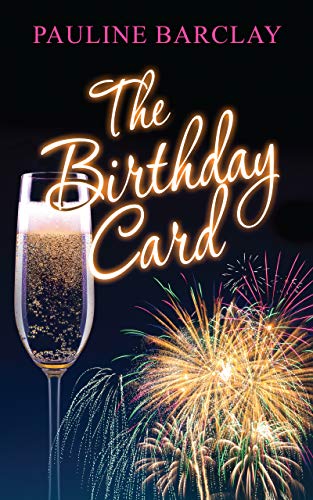
Pauline Barclay
Hello, I’m Dor, I’ve been asked what my occupation is, my girl says I’m a scrubber, she’s a cheeky mare! Ok, I’m a cleaner and have four jobs that have me rolling my sleeves up! Not glamorous, but it pays the bills, just! One of my cleans is an office, you wouldn’t believe how office folk leave the place, and the little bleeders like their morning joke! I’ll be putting my coat as there’re strolling in. “Lucky you, we’re starting and you’re off to put your feet up.’ I won’t say what I’d like to reply, but with three other places to muck out, it ain't polite! They might all look down their beaks at me, but at the end of the day I was the one who wiped the smile from their faces because sometimes it happens!


The Birthday Card
Web Site
Blog Site
Facebook
Twitter: @paulinembarclay
Instagram @paulinebarclay


Cryssa Bazos
Elizabeth Seton comes from a long line of herbalists and has a talent for the healing arts. Ever since she was a little girl in Weymouth, she planned to follow in her mother’s footsteps and continue to care for the sick who came to their door. Until civil war reared its ugly head and a community was left divided. With her family destroyed, Elizabeth uproots herself to live with her widowed aunt, a healer in her own community. Under the guidance of her aunt, Elizabeth once more explores her art by creating simple syrups, tinctures, salves, and purges. Snakeweed for the ague, willow bark for pain, king’s claver for consumption, and take care not to trod on moonwort lest your horse cast a shoe. The tools of her trade, mortar and pestle, scales and stills, transform herbs and roots into medicine, while her aunt’s receipt book captures generations of experience. 

Traitor’s Knot buy link
Website: https://cryssabazos.com
Twitter (@CryssaBazos)
Facebook


Anna Belfrage
Name: Adam de Guirande, protagonist of In The Shadow of the Storm. Occupation: Knight. Excels at the broadsword, is more than capable with a lance but will admit to being less of an expert with bow and arrow—he has archers to handle such. Recently wed to a lady who is not quite what she seems to be and is finding married life comes with numerous challenges, one of which is having a new person wiggle her way into his heart. Will do anything for his lord and master, Roger Mortimer, which does not necessarily endear him to King Edward II who considers Mortimer a rebel and his greatest enemy. But knights as loyal and honourable as Adam are hard to come by so hanging him may be a waste. Or maybe not—after all, WHO is he loyal to? That perfidious Mortimer or his king? 
Find out more about Anna on her website, check out her Amazon page and connect on FB and Twitter.

Buy In the Shadow of the Storm


Kathryn Gauci 
Sophia Laskaris is a couturier in Constantinople during the last years of the Ottoman Empire. Born into a family of professional embroiderers, she is a woman who is not only creative, but has a head for business too. Her grandmother, Dimitra, one of the first embroiderers to gain the patronage of the Sultan’s family and who took her business to great heights throughout the empire, was the guiding light in her life. Sophia opened up her couture house, La Maison du L’Orient, in Pera, the fashionable European district in the city, at a time when European fashion was becoming popular, but she continued to create designs based on the oriental look and was admired by Parisian designers such as Paul Poiret. She was highly educated, speaking several languages, and politically astute. With the outbreak of the Balkan Wars in 1912 and WWI, she used her work to not only aid Turks in distress, but to gather information for the Greeks who were seeking independence. When the situation deteriorated, she was forced to flee Turkey and reinvent herself as a seamstress in Athens. After the Germans occupied Greece, she drew on her previous background to aid the Resistance.

Buy The Embroiderer 
Website 
Facebook
Twitter
Instagram


Susan Grossey
My narrator Sam Plank’s occupation – that of magistrates’ constable – is central to his life and to my books.  Magistrates’ constables existed for only a short period of policing history: they were used in London during the two decades or so after the Bow Street Runners and before the Metropolitan Police, which was the 1810s and 1820s.  At that time there was little concept of investigation of crime, and none at all of detection.  If you were the victim of a crime and had some idea who had done it, you took your complaint to the local magistrate.  If he thought your claim had merit, he would task one of his constables with executing a warrant to bring the accused in for questioning.  Of course, “my” Sam is much more curious than that and makes a great deal more of his role, taking a particular interest in financial crimes…

Website 
Blog 
I tweet as @ConstablePlank
Monthly Newsletter (for updates & offers) 


Helen Hollick
I was elected King of England in January 1066. It was an honour I did not want, but who else is there able to protect this noble land from those who want to steal our wealth and the Crown for their own?
King Edward died without a son, the only other of royal blood is but a boy with no experience of battle or government. To be King I must ally with the Northern Earls, so I must take their sister to be my Queen. She is a comely lass, but I have a handfasted wife, my beloved Edyth, mother of my children. So, I set her aside for the good of England, for stability and prosperity. Hah! Being King is a privilege you say?  I swear it is not. But I will do my duty and all I can to protect you, my people from the  threatening tyranny of Normandy. Or die trying.

you tube trailer:
Website
Newsletter Subscription
Main Blog
Amazon Author Page 
Twitter: @HelenHollick


Charlene Newcomb 
I thank Mistress Annie from Westminster’s kitchens who invited me here today. I met her when nobles gathered to crown the new king. I was wearing my fancy clothes—stolen, of course—pretending to be a page. Mistress Annie knows I’m a thief living on the streets, sleeping in the eaves of St. Paul’s or here at Westminster many a night, but she doesn’t fault me. She feeds me and my friend now and again, best chicken in garlic and onion sauce served alongside the best gossip. We hear the king, the one called Lionheart, is gathering an army for a pilgrimage to Outremer. Streets of London or camp follower—not much different. Being good with dice, I can win a coin or two. We might pick up some work. I can brush down a palfrey, and Little John is handy with needle and thread. And if we cannot work, there’ll be pockets-a-plenty to pick. 
—meet young Allan and Little John in Men of the Cross


Find Char’s books on Amazon & connect with her on Facebook, Twitter, or Instagram.


Amy Maroney
Artist, healer: Miramonde de Oto was a woman of many skills. Raised in a convent in the medieval Pyrenees, she learned healing remedies from the “mountain folk” and worked during her adolescence in the convent’s infirmary. In her childhood, she used bits of charcoal to draw on the marble step of an old well. When she learned to write, she was tasked with copying and illuminating manuscripts in the convent’s library. Eventually she graduated to painting portraits, thanks to an exceptional art teacher. It wasn’t until catastrophe struck the convent that Miramonde would go on to use her talents in the wider world—and unlike most women artists of her time, she even got paid for it. 

The Girl from Oto is available on Amazon UK and Amazon US
Get a free prequel novella to The Girl from Oto and find Amy’s Blog here. Connect with her on Twitter, Instagram, Pinterest and Facebook


Alison Morton 
Jobs for the girls? Aurelia Mitela has always known she would serve her country in some way; she’s a bone-and-blood Roma Novan, member of a leading family with military commanders, diplomats and councillors among her ancestors. She becomes all three eventually, through AURELIA, NEXUS, INSURRECTIO and RETALIO, but is locked in bitter opposition with her lifelong enemy. Passionate and complex, she will do anything to protect both her daughter and her lover, but despite her innate strength she is crippled by self-doubt.

Soldering requires hard physical and mental training which needs persistence and a love of the life of camaraderie, tough decisions and quick and cool judgement in trying circumstances. In a softer way, so does a diplomat’s life! But being a councillor to a weak ruler requires the toughness of mind and an ability to suppress frustration, something that Aurelia doesn’t always achieve...


Amazon author page  
Buying link
Website
Website link to Aurelia specifically


Elizabeth St John 
Nan Wilmot
aka Anne St.John Lee Wilmot
The Countess of Rochester

Job Title: 
Spymistress to Charles II

Qualifications: 
Ambitious multi-talented outgoing individual with wide-ranging contacts across both Parliamentarian and Royalist departments. Highly skilled in project management, sales, marketing and procurement. Exceptionally discreet, trustworthy and decorous.  Fluent in English and French, with proven communication skills, especially in translations and multi-media. Experienced in multiple coding languages. Good social skills, conversant with inter-departmental protocols and processes and an ability to integrate smoothly within existing teams. Successful problem-solver, works well under stress. A valuable addition to any organization. 

Remuneration: 
Land, rents, livestock, jewelry, titles, perquisites, patronage, manors, arranged marriages, gold.
References: 
Charles II, Oliver Cromwell

Buy at
Amazon and Here
Website


Marian Thorpe 
Sorley (Lord Somhairle of Gundarstorp, to give him his full name) is a scáeli, in the language of Linrathe.
I adapted scáeli from scéalaí, Irish for storyteller. Like the skalds of Scandinavia and the bards of Celtic Britain, Sorley is a historian, a genealogist, a musician and a teacher. He and other scáeli’en hold the collective knowledge of their people. He studied long and hard to reach this position, learning songs and stories since childhood, followed by five years of study under a senior scáeli, then years of wandering, collecting songs and stories to add to his collection. Finally, he sat a formal exam of set pieces plus his own compositions, and built his own ladhar (a lyre) as well. Scáeli’en may wander for years, be attached to a noble house, or be appointed to a Ti’ach, a college, as Sorley is at the end of the series.

Buy Empire's Reckoning
Website
Twitter


Annie Whitehead
Æthelflæd - known to her family as Teasel - has quite an important job. She’s not only the daughter of Alfred the Great, she’s also destined to become ruler of an Anglo-Saxon kingdom. Not her father’s realm, but the neighbouring kingdom of Mercia. These two kingdoms are the only ones left in England still holding out against the Danish ‘Vikings’. Despite all expectations, Æthelflæd becomes a queen in all but name. And there’s the rub. Her job is that of queen, but she doesn’t have the official title. She has to learn to live with a husband for whom she doesn’t initially care, discover how to win over the people of Mercia, and, oh yes, protect Mercia not only from the ‘Vikings’, but, ultimately, her own brother. And all this without an official job contract.

Monday, 25 November 2019

Review: Written in their Stars by Elizabeth St. John

I was privileged and delighted to receive an advance review copy of the latest book by Elizabeth St. John

London, 1649. Horrified eyewitnesses to King Charles’s bloody execution, Royalists Nan Wilmot and Frances Apsley plot to return the king’s exiled son to England’s throne, while their radical cousin Luce, the wife of king-killer John Hutchinson, rejoices in the new republic’s triumph. Nan exploits her high-ranking position as Countess of Rochester to manipulate England’s great divide, flouting Cromwell and establishing a Royalist spy network; while Frances and her husband Allen join the destitute prince in Paris’s Louvre Palace to support his restoration. As the women work from the shadows to topple Cromwell’s regime, their husbands fight openly for the throne on England’s bloody battlefields.
But will the return of the king be a victory, or destroy them all? Separated by loyalty and bound by love, Luce, Nan and Frances hold the fate of England—and their family—in their hands.
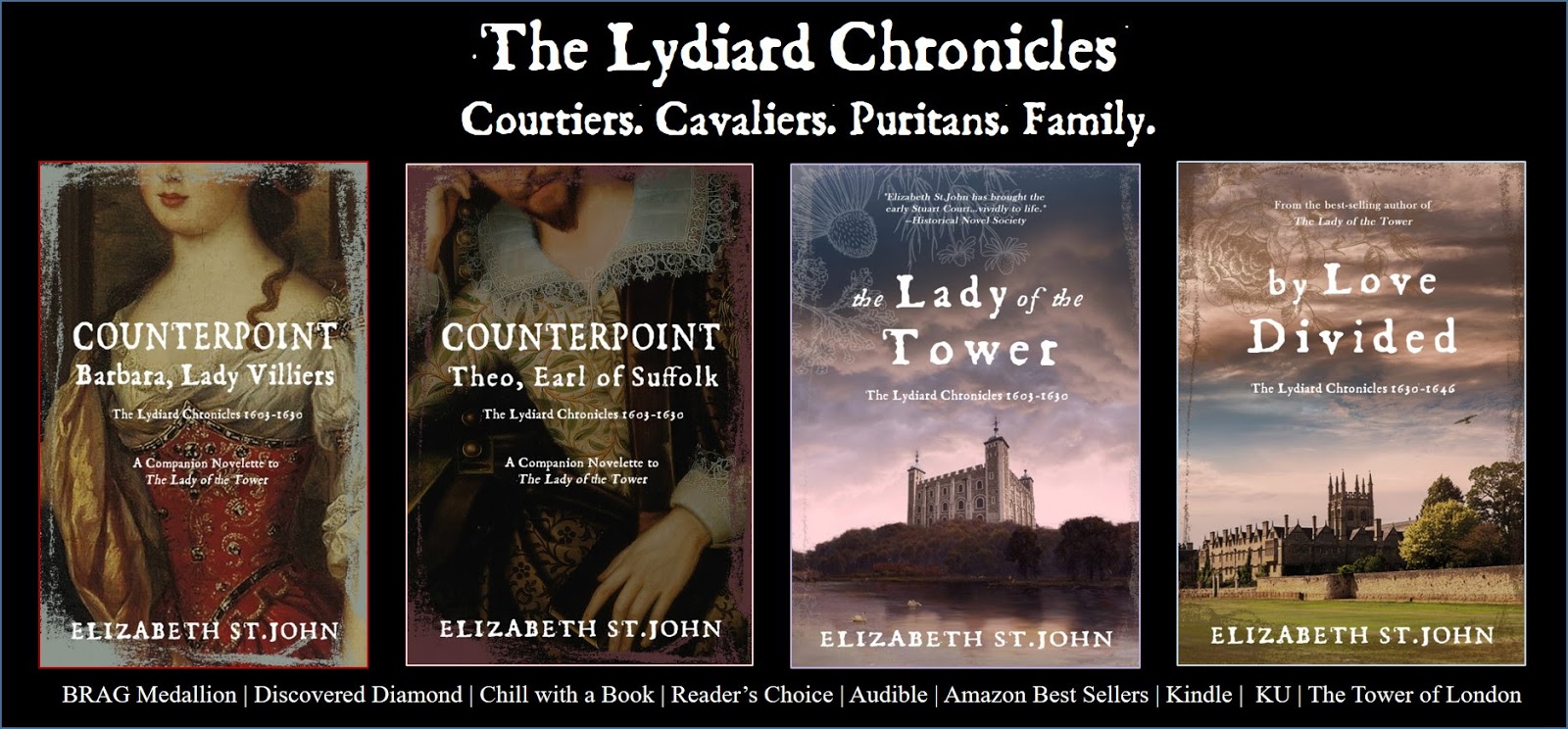
A true story based on surviving memoirs of Elizabeth St.John's family, Written in their Stars is the third novel in the Lydiard Chronicles series.


This is, as the blurb says, the third in the Lydiard Chronicles and one thing I would say at the outset is that ideally readers should acquaint themselves with this family by reading the first two in the series. Reading this book as a standalone is perfectly possible, as Ms St. John makes it clear who everyone is, and offers appropriate backstory where necessary. But to skip the first two books is to miss the nuance, and the development of the characters who now play out the final part of this rich and detailed story.

At the centre of this story is the divided loyalties of a family torn apart by civil war, the continuing struggle for peace and resolution of all conflict, political and personal. This is not so easy for, as one character says, "The war has not ended, not while the king breathes and hope beats in men’s hearts.”

Luce, Nan and Frances have different experiences of life, love, and war, yet they are bound together, and not just by their family connections. They are women who find a way to live through such historic times, and to protect what is dear to them. Sometimes this sees them working together, and sometimes it throws them into conflict. And this is a perfect time for me now to talk about the author's skills.

There is a section of the book where Frances has reason to turn against Nan and the drama works brilliantly because Ms St. John allows only us, the reader, to know the truth.

She is also a master of scene-setting, so that we can see the characters in action and in context. She never forgets who else is in the room and allows for interaction. I particularly liked the distracting chatter at the moment Frances is put at odds with Nan, and when Barbary Villiers is being spoken to by Nan but is constantly trying to look over Nan's shoulder to try to attract the attention of the king. Such little touches bring the tableaux to life.

We aren't just reading about these people, we can see them. We watch the scenes unfolding. The characters so inhabit their world that it's exactly as we assume it was. Yes, this is how 17th-century people moved, spoke, felt. Nothing is anachronistic, nothing jars or jolts us back to the present.

And the author achieves this in a way that makes it look effortless. She has an economy of phrase and yet manages to drop the reader right into the 17th-century world. The dialogue is realistic and appropriate. While the politics direct the wider stage, the story remains personal. We really feel for this family riven by war and divided loyalties.

The book is evidently well-researched. The author knows her history but her characters know it too and there is no clumsy exposition. Everything just flows. It would have been easy for Ms St. John to dump a lot of information (she is a direct descendant of the family) and to let the documented history speak for itself, yet whilst we are reading about people who actually lived, we are also reading about characters who have been brought to life by the authors's research, imagination, and creative pen. Had these all been purely fictional characters, they would still have felt real.

On a side note, since I'm talking about real history, there was a moment in the book where I thought, 'Did that really happen? If it's true, it is shocking and appalling.' And yes, sadly, it is; a terrible and stark reminder of the dangers these people faced. When it is pointed out that two characters speak of “Old history in these times, sir,” the reply comes, “And yet memories are long.”


And just when we think all will be well come the restoration, the reality hits. Not everyone will be forgiven (particularly the king-killers). Perhaps it is naive to hope for a happy ending? The outcome, though, is not a foregone conclusion and the drama and tension continue to the very end. In some ways, hidebound by the historical fact, the author cannot offer a happy-ever-after resolution and yet, here at the end of this remarkable trilogy, the ends of the threads are tied up beautifully. 

Of course, along the way, and again sticking to the known facts, Ms St. John must deliver some bad news from time to time. No spoilers, but again, with a breath-taking economy of words, she made me cry.

You can find the book:
Kobo, Apple, Nook:   https://books2read.com/u/mZBDw5  
Amazon:  https://geni.us/MyBookWITS


Monday, 21 October 2019

Tudors Vs Stuarts, with Elizabeth St John & Janet Wertman


Well here's a bit of fun. I've read two each of the novels by these brilliant authors and can highly recommend them all. But here's the burning question: Which are best, Tudors or Stuarts?

I asked Janet and Elizabeth to slug it out:


AW: Can you sum up in a sentence (or two) why you are drawn to the era?

JW: As a reader and writer, I am captivated by the stories. Huge reversals – people soaring high then brought low and (usually) executed (Wolsey, Anne Boleyn, Cromwell, Norfolk, Margaret Pole, both Seymour brothers, Northumberland, Essex….) And symmetry in the smallest details and the biggest arcs: Catherine of Aragon spent seven years waiting for Henry to make her his bride, then seven years waiting for him to fall out of love with Anne Boleyn; Anne Boleyn used the promise of a son from a God-approved marriage to unseat Catherine, then was unseated herself by Jane Seymour using the same playbook; Henry falsely accused one wife of adultery, then had her cousin actually do the deed; Thomas Cromwell turned the attainder procedure into an easy way to bring down pretty much anyone – then was felled himself by that same method. And that’s just the tip of the iceberg!

ESJ: The era chose me. I’ve always loved researching my ancestors, and I was quite happily digging around in Medieval and Tudor times. And then I discovered the English Civil War diary of Lucy Hutchinson, daughter of Lucy St.John. I became hooked on the Stuarts and all that befell them.

AW: Following on from that, what drew you to your particular characters?

JW: Originally I chose the Seymours because they were central to the Tudor era – and therefore provide the ultimate vantage point from which to recount events. They also happen to have amazing stories of their own.

Jane Seymour was in the middle of Anne Boleyn’s fall – the seminal event of Henry’s reign; hers is a story about morality. Edward Seymour was front and center during the second triad of Henry’s wives; his story is about power. And Edward Tudor…the poor boy king who had to execute two uncles… his is a story of betrayal.

ESJ: The story of my family was intriguing – especially when I found the memoirs of the first early modern women diarist that directly spoke of my ancestress. Then to find that Lucy St.John lived in the Tower of London for 13 years, had a secret lover, and raised two children who fought on opposing sides of the Civil War was a story that had to be told. Add to that a wicked stepmother and a hateful sister who was the grandmother of THE Barbara Villiers, mistress to Charles II, and I knew I could keep myself – and readers – entertained for years.


My characters lived on the edge of court life. As I researched the lives of James I, Charles I and Charles II, as well as Oliver Cromwell and nobility and generals, these personalities came alive. Their experiences presented a parallel in so many struggles for power and political freedom we are experiencing today. Many times, in reading letters and diary entries, especially of the emerging women’s voices, the distance between the centuries disappeared.

AW: You both live some distance from your locations - does that present additional research challenges, and if so, how do you get round those?


JW: Thank heavens for the internet! There are so many primary resources available – state papers through British History Online, chronicles and histories, letter collections – not to mention the other wildly cool stuff out there (Ordinances of the Royal Household, Cobbett’s State Trials, The Good Housewife’s Jewel, Privy Purses expenses, Anne Askew’s examinations…I keep a list of my favorites and send it to people when they subscribe to my blog). My latest obsession is The Private Life of an Elizabethan Lady: The Diary of Lady Margaret Hoby (1599-1605).


Still, there are some serious limitations to these resources – they don’t really give the true feel of the place. Like when characters were inside a castle, looking out, what did they see? That’s not the kind of thing you can get from photos – photographers aim at the castles, not away. For that, I am profoundly grateful for the trips I have taken to England and Scotland, visiting castles and churches, walking the streets and the countryside, looking out over the Solent and sniffing the sea air….Those details make all the difference.

ESJ: I’m really fortunate that my family lives in England, and I have the opportunity to spend a lot of my time there. So, whether researching the archives at Lydiard House, the setting for my stories, or exploring locations such as the Tower of London or Nottingham Castle, I always combine research with family time. Fortunately, they are all as equally historically obsessed as I am, so they never need a reason to pile in the car and go “St.John-hunting”, explore a castle ruin or crawl around on their hands and knees deciphering ancient gravestones. 

For the time I need to read primary documents and accounts, I access digital records by the National Archives, and British-History Online, as well as the History of Parliament. I use their document ordering services for copies of original wills, letters and court hearings. And then the Bodleian has a wonderful online library. Oh, and the Calendar of State Papers…and on, and on down the rabbit holes!

AW: What would you say was the most far-reaching event of the Tudor/Stuart period, and why?

JW: Anne Boleyn’s refusal to become Henry’s mistress – one of the seminal events of the Early Modern Era. It was wild enough for a maid of honor to refuse a king, but that simple “no” toppled an entrenched power structure, leading to a new church, a new way of governing, and a new morality. It created the world as we know it.

ESJ: Probably the English Civil Wars, for the complete shift in transitioning power to the people and challenging the previous divine right to rule, initiating an open debate about personal and religious freedoms, limiting the power of the monarchy, creating liberty of the press, and forming the foundation for ideas that developed the American political and constitutional thought.


AW: In a sentence, (or two!) why is your period the best?

JW: I always go back to the stories – there are just so many of them, and more specifically so many that we all know. I see a parallel here with the Beatles: they put out so many songs, and almost any person you ask can actually sing along to more than forty of them (seriously – try it). What other period/band could you say that about?

ESJ: Fabulous clothes, brilliant thinking and the epic struggle between the Cavaliers ("Wrong but Wromantic") and Roundheads ( "Right but Repulsive") (thanks to 1066 and All That).

AW:Finally - and on a lighter note - who has the best costumes, and why?

JW: Tudors! They just feel more accessible: you can look at the pictures and understand all the elements that go into the outfits, the layers that create the looks. And you can actually imagine yourself wearing them as you go through life – which is hard to say that about the farthingales and ruffs that came later (admittedly even during the Elizabethan era). Plus, as a woman with short hair I adore the headgear – the gable hoods and French hoods! The thought of having to create elaborate “dos” every day just makes me roll my eyes…

ESJ: Really? Men in tights with codpieces, or a dashing Cavalier. Is there a competition?


Thank you so much Ladies! I shall remain totally impartial but I think you both stated your case really well.

Find out more about these wonderful authors:


Friday, 30 November 2018

Review/Interview: Elizabeth St John, author of the Lydiard Chronicles

For those who don't know, the Lydiard Chronicles are set in the seventeenth century and concern the real life St John family, who were related to the powerful Villiers family, pivotal players at court. These are stories about real people, some of whom just happen to be the ancestors of the author. I write about much earlier times but, having studied it almost as much as the Anglo-Saxons right through to degree level, I have a deep and abiding love for the seventeenth century and enjoy reading books set in this period.


I read Books 1 and 2 - The Lady of the Tower and By Love Divided - in quick succession and decided to wait until I'd finished Book 2 before reviewing. Why? Because I read in Kindle format, and after I'd finished Book 1 I was able to read the first few pages of Book 2 and got stuck straight in!


First impressions: I'll start with the one very tiny negative. It's a personal choice, but I'm not a huge fan of books written in the first person. That's just me. I wasn't sure whether the personality of the main character would shine through but I stuck with it and I'm so glad that I did. Lucy finds her voice, her strength of character, developing all the time as she grows from girl to adult. I won't give any of the plot away, but by the time she became the Lady of the Tower, I was fully invested in her life, willing some happiness for her. (Does it come for her? You'll have to read to find out!) This is why, by the end of Book 1, I wanted to move immediately on to Book 2. By Love Divided is written in the third person, and while Lucy is still very much in the centre of things, the younger generation now also comes to the forefront. The family relationships, in all their complexity, continue to drive the plot and the characters are very well drawn indeed. Initially I wasn't sure about Barbara Villiers - could anyone be so nasty to her sister and still become a fully-drawn character? Yes, they can. And she does.


As I said, no plot spoilers. But here's a list of what's fabulous about these books: a deft sketching of time and place; the sights, sounds, smells and ways of seventeenth-century England provide an accurate backdrop to the action which brings the scenes alive. The machinations of the court and the people who thrived on such a life are depicted in all their - sordid - brilliance. The reiteration that happiness so often depended on royal favour, that middle- to high-ranking men could lose their livelihoods assisting the king and that widows were vulnerable, and not just financially. Another aspect of life shown vividly here is how often during this period, families were divided, by religion, politics, or both.

The added interest for me, especially being a writer myself, was that these novels are based not only on real people, but the ancestors of the author. I had to know more, so I got in touch with Elizabeth and asked if she'd mind answering a few questions:

AW: I know that the Lydiard Chronicles tell the story of your ancestors, but how did you come to find out about them initially?

EStJ: I grew up as an only child on the North Sea coast; during the winters, when the east wind blew in from Siberia, the casing on our old grandfather clock would open by itself, and my mother would look up from her embroidery and exclaim “here comes Uncle Brian again”. Surrounded by old family furniture, dusty letters and diaries, and flyleaf-inscribed books, the ghosts of dead relatives were far more interesting than those who were living, and I immersed myself in our family history.

My Sundays were usually spent “St.John-hunting” which usually involved traipsing around overgrown churchyards in the pouring rain, clambering over ruined castles and ancient monuments, and drinking luke-warm tea from thermos flasks. Our family tree was well-researched, and the one remaining family seat of Lydiard Park contained portraits going back to Elizabethan times. However, no-one in our family had known the story of Lucy St.John—The Lady of the Tower—and when I discovered the Memoirs in Nottingham Castle’s file cabinet, I was overjoyed. Here was the story for the book I’d always wanted to write.

AW: How wonderful to not only discover famous ancestors, but find their antics worthy of a series of novels! How much sympathy, if any, do you have for Barbara? How did you set about writing her character without making her a caricature? [pictured below: Lucy (left) & Barbara]


EStJ: I actually thought Barbara a fascinating character, and she only emerged as the main antagonist as I constructed the final plot of the book. The Memoirs describe Aunt Joan by name as being “more wicked than the tales of a stepmother”, while Lucy’s sisters were generally described as envious at her beauty. As I researched Barbara’s life, I realized that she was a very clever woman, who managed to hang on to her wealth, property and patronage after her husband’s death and the assassination of her brother-in-law, the Duke of Buckingham. She married her children into extremely influential families, and of course, her granddaughter was Barbara Villiers, Lady Castlemaine, mistress to Charles II. She knew exactly what she was doing.


I feel a great deal of responsibility to all my characters to try to write them as the real people they were, not two-dimensional caricatures. With Barbara, I wanted enough sting in her to create tension throughout the books, but still for readers to have a grudging admiration for her ability to maneuver through the perilous world of Stuart politics. Knowing the full extent of her life through the research, enabled me to write her exploits with empathy.

AW: She certainly comes across as a 'player' but also one who is at one with her choices. How familiar were you with this time period before you began researching the characters?

EStJ: I knew almost nothing about this time period, having had much more interest in Medieval and Tudor England. It was actually with a heavy heart that I started researching and writing, for as a result of our typical English education, I thought this period and the Civil War was about the most boring period of history imaginable. But, as I started to read more deeply the letters, court documents and memoirs themselves, I began to be fascinated by the incredible shift in society and politics that occurred during this time.

Along with primary sources such as Pepys and Evelyn, there were many modern biographies and non-fiction books I read that absolutely brought this home and once I was able to get a feel for the people, I realized that contextually they were all trying to survive a very uncertain world. Interestingly, I wrote The Lady of the Tower during the great recession of 2011-12, and By Love Divided during the run up to Brexit and the US Elections. Both drove home to me that the central themes of corruption and abuse of power haven’t changed much in four hundred years.

A few books I really enjoyed that made this time period really accessible:
The Weaker Vessel – Antonia Fraser
Buckingham: The Life and Political Career of George Villiers – Roger Lockyer
Shakespeare’s Restless World – Neal McGregor
The White King – Leanda de Lisle
The Killers of the King – Charles Spencer
Lucy Apsley Hutchinson's signature

And the original source for my novels:
Memoirs of the Life of Colonel Hutchinson – Lucy Hutchinson

AW: The research has certainly paid off - I felt that the seventeenth-century world was beautifully portrayed. I believe you are currently hard at work with Book 3. How far do you envisage taking the series?

EStJ: Book 3 is well underway, and as a first draft, I have a beginning, middle and end. Hoorah! You have to write that way with biographical historical fiction. This book is intended to complete the stories on this generation of the family – Lucy, Allen and Luce. However, a few new family members have decided to join the party (such as Barbara Villiers, Lady Castlemaine, and John Wilmot, Earl of Rochester), and they may decide to be the basis for another book. I took my inspiration on “Chronicles” as a title from Narnia – the stories don’t all have to be sequential, and people can come and go. I’ll just keep writing for the love of it. Who knows – maybe the medieval St.Johns will come clamoring next!

I asked Elizabeth if she could send me a picture of the magnificent Lydiard House, and here it is, in all its glory: 


Connect with Elizabeth on her website: www.elizabethjstjohn.com
and on Facebook: www.facebook.com/ElizabethJStJohn